You do not need a personal trainer to get fit.
If you already train consistently, understand how to structure and progress your workouts, and continue to see results, you may be perfectly capable of training on your own.
But starting fitness can be confusing. You may have hundreds of workouts saved, access to a gym and plenty of motivation, yet still not know which exercises to choose, how much weight to use or whether what you are doing is actually taking you toward your goal.
That is where professional coaching can be valuable.
The question is not whether you are capable of exercising alone. It is:
Would better structure, individual feedback and accountability help you train more effectively and consistently than you currently do on your own?
This guide explains when a personal trainer is worth it for beginners, who benefits most from individual coaching, when you may not need one, and what to look for before spending your money.
Quick Answer: Is a Personal Trainer Worth It for Beginners?
It depends less on your fitness level and more on how much knowledge, structure and accountability you already have.
You are new to training, unsure what to do or want individual feedback while learning.
You can train alone but want better structure, accountability or more efficient progression.
You train consistently, understand programming and continue to make progress independently.
A good trainer should make you more capable over time, not permanently dependent on coaching.
What Does a Personal Trainer Actually Do?
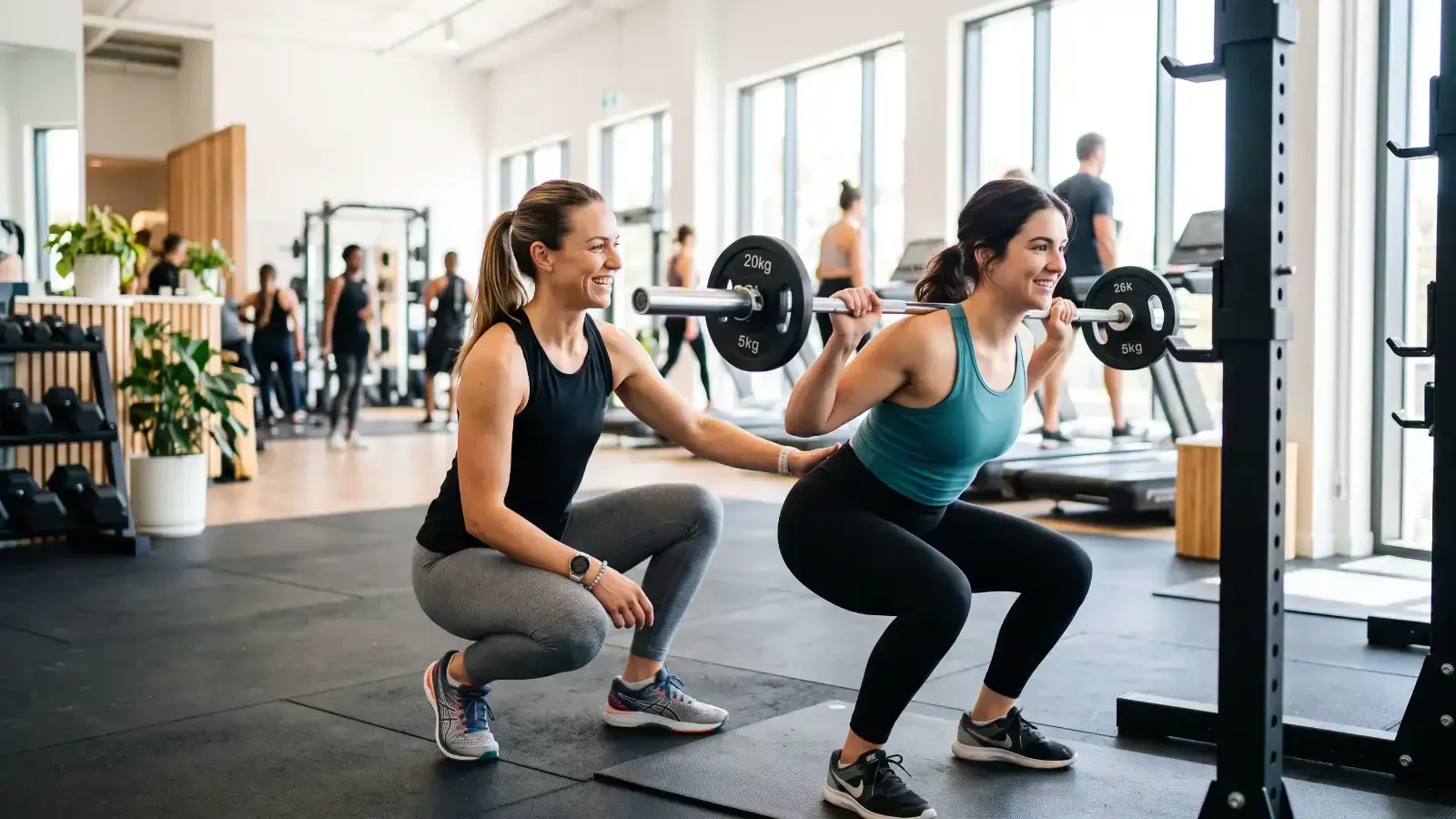
A personal trainer should do much more than count repetitions.
Good coaching begins by understanding your goals, current fitness level, training history, lifestyle, available equipment and any relevant limitations.
From there, a trainer can help with:
- exercise selection;
- technique and movement feedback;
- programme structure;
- appropriate training loads;
- progressive overload;
- training volume and recovery;
- exercise adaptations;
- progress tracking;
- accountability.
For beginners, one of the biggest benefits is turning an overwhelming amount of fitness information into one clear plan.
Instead of choosing a different workout every time you train, your sessions begin to connect. What you do this week relates to what you did last week and what you will progress next.
If you are completely new to strength training, our guide to the 7 core movement patterns every beginner should learn is a useful place to start.
When Is a Personal Trainer Especially Useful?
Personal training is not only useful for complete beginners. Certain circumstances make individual coaching particularly valuable because the programme may require more structure, adaptation or specialist knowledge.
-
Beginner
Complete Beginner
Learn fundamental exercises, technique and programme structure without piecing everything together yourself.
-
Specialist
Pregnancy
Training can be adapted around symptoms, comfort, training history, pregnancy progression and medical guidance.
-
Return
Postnatal Training
Rebuild strength progressively while considering individual recovery after pregnancy and birth.
-
Adaptation
Previous Injury or Limitation
Training can be adapted once exercise is appropriate and within relevant medical or physiotherapy recommendations.
-
Active Aging
Starting Later in Life
Build strength, balance and physical capacity progressively around current ability and recovery.
-
Consistency
Stop-Start Training
Regular sessions can provide external structure when maintaining a routine independently is difficult.
-
Progress
Training Plateau
Programming, load, volume and recovery can be reviewed rather than simply adding more exercise.
-
Goal
Specific Objective
Structure training around strength, muscle gain, body composition, mobility or performance.
-
Efficiency
Limited Training Time
Prioritise the training that matters most instead of filling limited time with random workouts.
You do not need to belong to one of these groups to benefit from personal training.
Sometimes the greatest advantage is simply having a clear plan, expert feedback and someone making sure your training continues to progress.
5 Signs You Could Benefit From a Personal Trainer
You do not need to wait until training has completely stopped working before asking for help.
-
1
No Clear Plan
Your workouts feel random rather than connected to a programme or measurable progression.
-
2
Stop-Start Cycle
You repeatedly begin training but struggle to maintain a consistent routine.
-
3
Technique Uncertainty
You want individual feedback while learning unfamiliar exercises or increasing load.
-
4
Progress Has Stalled
You train consistently but no longer know whether resistance, volume, frequency or recovery needs to change.
-
5
Specific Goal
You want your programme built around a clear strength, body-composition, mobility or performance objective.
If consistency is your biggest challenge, our guide on how to build a fitness routine that actually sticks looks at how to create structure that works beyond short-term motivation.
If you already train consistently but your results have stalled, start with 6 common reasons you may not be seeing results at the gym before simply adding more exercise.
Does Training With a Coach Actually Make a Difference?
Research suggests that supervision can make a meaningful difference, although this does not mean everyone needs a personal trainer.
A 2025 randomized controlled trial comparing supervised, app-guided and self-guided resistance training found greater improvements in several outcomes in the supervised group, including squat strength, while app-guided training remained a viable alternative when full supervision was not practical.
An earlier randomized trial examining supervised versus unsupervised resistance training also reported advantages for supervision across several muscular adaptations and adherence outcomes.
Worth noting about both studies: the participants were already training regularly, not beginners. That makes the findings a conservative reference point rather than an overstatement, since the gap between guided and unguided training is generally widest when someone is still learning what to do.
These studies do not prove that personal training is automatically better for every person.
They support a simpler point:
The quality of the programme matters, but so can the quality of the guidance around it.
When You Might Not Need a Personal Trainer
Personal training is not necessary for everyone.
You may be able to train very effectively on your own if you:
- understand fundamental exercise technique;
- know how to structure and progress a programme;
- train consistently without external accountability;
- continue to make measurable progress;
- enjoy managing your own training.
Budget matters too.
Personal training is an investment. If coaching is not financially realistic, a well-designed programme followed consistently can still produce excellent results.
Some people also use coaching temporarily.
You might work with a trainer to learn the fundamentals, become confident with certain exercises or build your first structured programme before gradually completing more training independently.
Personal Trainer vs Training on Your Own
- Lower financial cost
- Maximum scheduling flexibility
- Full training independence
- You manage your own progression
Best fit: You understand programming, stay consistent and continue to progress independently.
- Individual feedback
- Structured progression
- Scheduled accountability
- Programme adaptation
Best fit: You need more knowledge, structure, confidence or individualisation.
There is no rule saying you must choose only one.
Many people combine coached sessions with independent workouts as their confidence and training knowledge develop.
In-Person, Online or Hybrid Personal Training?
Personal training no longer has to mean meeting a coach inside a commercial gym.
The right format depends on your experience, goals, location, schedule, budget and how much direct support you need.
What About Pregnancy, Postnatal Training, Previous Injuries or Active Aging?
These are situations where a trainer’s specific qualifications, experience and professional scope become particularly important.
For many women with uncomplicated pregnancies, physical activity can remain appropriate when there are no contraindications and exercise is adapted to the individual. The 2019 Canadian Guideline for Physical Activity Throughout Pregnancy provides evidence-based recommendations for pregnant women and exercise professionals.
Training may need to change depending on symptoms, comfort, previous training experience, the individual pregnancy and medical advice.
Our guide to training safely during pregnancy looks at these considerations in more detail.
Returning to exercise after birth is similarly individual. The 2025 Canadian Guideline for Physical Activity, Sedentary Behaviour and Sleep Throughout the First Year Postpartum provides updated evidence-based recommendations for physical activity during the first year after birth.
A personal trainer should not diagnose injuries or provide medical rehabilitation.
If you have an acute injury, unexplained pain or a medical condition affecting exercise, appropriate healthcare assessment may be necessary first. Once exercise is appropriate, training can often be structured around relevant medical or physiotherapy recommendations.
Look for relevant prenatal qualifications and coaching that adapts to symptoms, training history, pregnancy progression and medical guidance.
Explore Prenatal TrainingReturning after birth should reflect individual recovery rather than automatically returning to previous loads or training volume.
Explore Postnatal TrainingA trainer should stay within professional scope and structure exercise around relevant medical or physiotherapy recommendations where required.
Explore Personal TrainingStrength, balance, mobility and everyday physical capacity may require different priorities from general fitness training.
Explore Active Aging & MobilityThe principle is simple:
Choose a trainer whose qualifications and experience match what you actually need.
Is a Personal Trainer Worth the Money?
That depends on what you receive for the investment.
Paying someone simply to stand beside you while you exercise offers limited value.
Good personal training should provide some combination of:
- individualised programming;
- technical feedback;
- structured progression;
- appropriate exercise adaptations;
- accountability;
- progress tracking;
- education.
For a beginner, the value may come from reducing months of trial and error.
For someone more experienced, it may come from identifying why progress has stalled or creating a more specific programme.
The question should therefore not only be:
“How much does a personal trainer cost?”
It should also be:
“What am I actually receiving for that investment?”
If price is part of your decision, our 2026 Personal Trainer Cost in Dubai guide compares session rates, packages and what professional coaching should include.
How to Choose the Right Personal Trainer
Qualifications matter, but so does the coaching relationship.
A good trainer should:
- ask about your goals and history before programming;
- hold appropriate qualifications;
- explain the purpose behind your training;
- adapt the programme as you progress;
- track meaningful outcomes;
- stay within their professional scope;
- make you comfortable asking questions.
Over time, good coaching should increase your understanding of your own training rather than make the process feel mysterious.
Personal Trainer Red Flags
Guaranteed or extreme results are promised within unrealistic timeframes.
Different clients receive essentially the same programme regardless of goals or experience.
Concerning symptoms are dismissed or clients are simply told to push through them.
Every session is judged by how exhausted you feel rather than whether the programme is progressing.
Medical diagnoses, treatment or rehabilitation are offered outside the trainer’s professional scope.
Exercises change constantly without a clear programming or progression strategy.
A difficult workout is not automatically an effective workout.
Progress should be the goal, not punishment.
If you are comparing different coaching models, our guide to choosing the best personal trainer in Dubai explains the differences between private trainers, commercial gyms, transformation studios, specialist coaches and online options.
Learn the fundamentals with more direct guidance before gradually becoming more independent.
Combine professional programming and accountability with workouts you complete independently.
You may need targeted expertise rather than permanent supervision of every workout.
If your training already works, ongoing personal coaching may not currently be necessary.
So, Is a Personal Trainer Worth It for Beginners?
For many beginners, a good personal trainer can be a worthwhile investment.
Not because beginners are incapable of training alone, but because the first stage of fitness often contains the most uncertainty.
You are learning:
What should I do?
How should I do it?
How much should I do?
How do I know when to progress?
If you already have good answers to those questions and can follow through consistently, you may not need ongoing coaching.
If you do not, professional guidance can make the process clearer, more structured and easier to sustain.
The best outcome of personal training is not needing somebody to tell you what to do forever.
It is becoming stronger, more confident and more capable of understanding your own training.
At Fit with Rozzie, personal training in Dubai is built around the individual, with coaching available at home, in villas, residential building gyms and other suitable training environments depending on location, goals and coach availability.
Frequently Asked Questions
Is a personal trainer worth it for a complete beginner?
For many beginners, yes. Personal training can provide a structured starting point, individual feedback and guidance on how to progress. It is not essential, but it can reduce much of the trial and error involved in learning how to train.
Do I need a personal trainer to get fit?
No. Many people achieve excellent results independently. If you understand how to train, remain consistent and continue to progress, a personal trainer is not necessary.
How often should a beginner see a personal trainer?
There is no universal number. Frequency depends on your goals, experience, schedule, budget and how much training you complete independently. Some beginners benefit from one coached session per week, while others may prefer two or more while learning the fundamentals.
Can a personal trainer help if I have an injury?
A personal trainer should not diagnose or medically rehabilitate an injury. Once exercise is medically appropriate, however, a trainer may be able to adapt training around previous injuries or follow recommendations from a doctor or physiotherapist.
Is online personal training effective for beginners?
It can be. Live online coaching can provide individual programming, real-time interaction and accountability. Some complete beginners may prefer in-person support while learning unfamiliar exercises or equipment, while others can train effectively online depending on their setup, confidence and goals.
How long should I use a personal trainer?
There is no required duration. Some clients work with a trainer for a short period to learn the fundamentals, while others value ongoing programming, accountability and progression. The right duration depends on what you want coaching to achieve.
The following research and evidence-based guidelines were used to support the training, pregnancy and postnatal recommendations discussed in this article.
-
2025 · Randomized Controlled Trial
Supervised, App-Guided and Self-Guided Resistance Training
Compared supervised, app-guided and self-guided resistance training across several training outcomes.
View on PubMed -
2023 · Randomized Trial
Supervised vs Unsupervised Resistance Training
Examined how training supervision affected resistance-training outcomes and exercise adherence.
View on PubMed -
2019 · Clinical Guideline
Canadian Guideline for Physical Activity Throughout Pregnancy
Evidence-based recommendations covering physical activity and exercise throughout pregnancy.
View on PubMed -
2025 · Clinical Guideline
Canadian Guideline for Physical Activity, Sedentary Behaviour and Sleep Throughout the First Year Postpartum
Evidence-based recommendations for physical activity, sedentary behaviour and sleep during the first year after birth.
View on PubMed