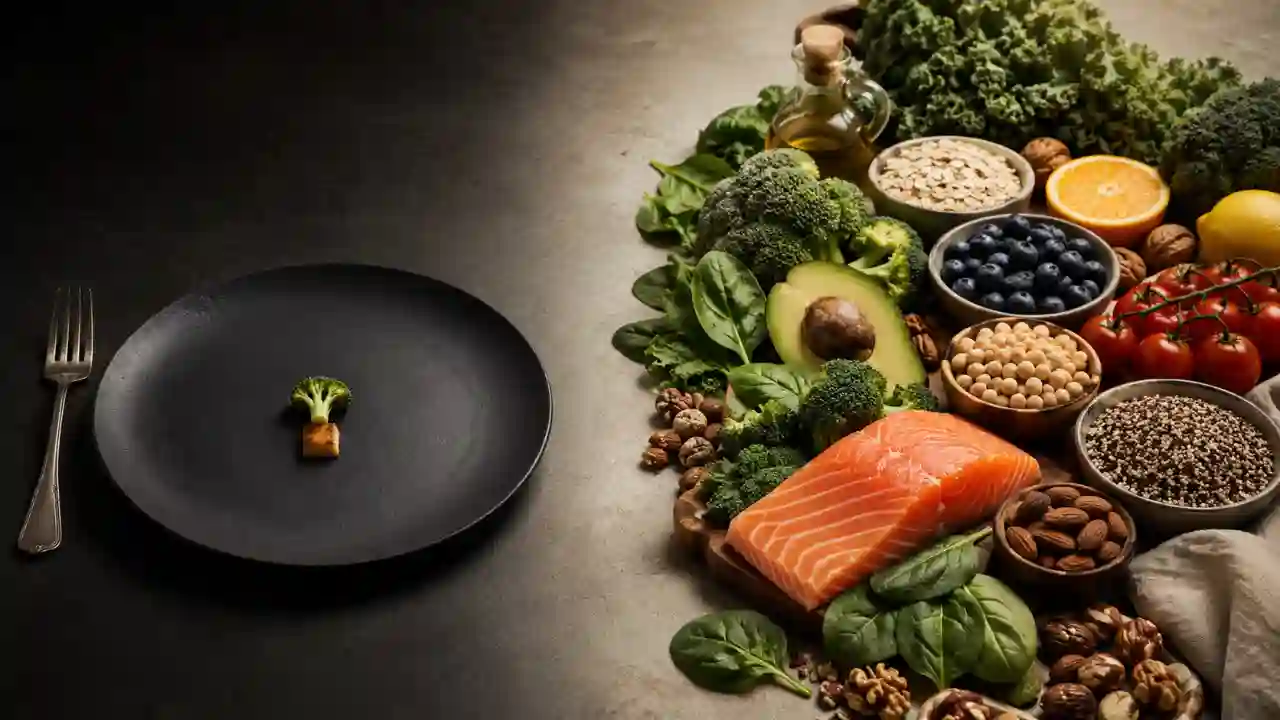
Most diets are not failing because people are weak. They fail because they are usually built for short-term control, not long-term life.
Research shows a hard truth: in long-term weight loss studies, more than half of the lost weight is often regained within 2 years. After 5 years, more than 80% of the lost weight is regained, according to a major review on long-term weight management.
You may start a diet, follow the rules, lose some weight and feel motivated. But then real life comes back. Work gets busy. You eat out. You travel. Stress hits. Meal prep stops. Social events happen. The strict plan starts to feel impossible, and slowly you return to your old routine.
That is not a discipline problem. That is a design problem.
Most diets are designed like a temporary project, not a realistic lifestyle system. A diet can tell you what to eat for a few weeks. Nutrition coaching helps you learn how to eat in a way you can actually maintain.
More than 50% of lost weight is often regained within 2 years. After 5 years, more than 80% of lost weight is regained. That is why long-term results need more than another strict diet. |
Quick Answer
Diets often do not work long-term because they rely on short-term restriction instead of sustainable habits. Many diets reduce calories quickly, but they do not teach you how to eat around real life, training, stress, travel, restaurants and changing routines. Long-term results usually require structure, flexibility, consistency and ongoing behavior change.
Why Diets Often Work at First
Most diets create one simple thing: a calorie deficit. That means you consume less energy than your body uses. When this happens consistently, weight loss can occur. This is why many different diets can produce results in the beginning, even if they use very different rules.
Low-carb diets reduce food choices. Low-fat diets reduce calorie-dense foods. Fasting reduces eating windows. Meal plans remove decision-making. At first, this can feel helpful because it gives you structure.
The problem is not that structure is bad. The problem is when the structure is too rigid to survive real life. Harvard Health summarizes that many popular diets can be modestly effective for a while, but after about a year, their benefits are often largely gone in the long term, as explained in this Harvard Health article on dieting.
A diet can help you lose weight for a short period. But if it does not teach you how to build meals, manage portions, eat enough protein, handle cravings, eat out, travel and adjust when your routine changes, it usually does not last.
The Biggest Problem: Diets Are Temporary
Most diets are built around a start date and an end date. You think:
“I will do this for 8 weeks.”
“I will cut this food until summer.”
“I will be strict until I reach my goal.”
That mindset creates a problem. If the method is temporary, the result often becomes temporary too.
Long-term nutrition needs a different question: Can I see myself eating this way one year from now? If the answer is no, the plan probably needs to change.
Healthy eating should not feel like a punishment. It should feel like a structure you can return to, even when life is busy.
Dieting Often Ignores Behavior
Many people already know the basics of healthy eating. They know protein matters. They know vegetables are good. They know alcohol, sweets and delivery food can add up. But knowledge is not the same as behavior. You might know what to do and still struggle to do it consistently.
Food choices are influenced by:
- stress
- sleep
- work schedule
- social life
- cravings
- emotions
- habits
- environment
- convenience
- training routine
A strict diet usually says, “Follow these rules.”
Nutrition coaching asks a better question: What system helps you make better choices in your actual life?
That is the difference.
Your Body Also Adapts
Weight loss is not just about willpower. Your body can adapt when you lose weight.
As body weight decreases, your energy needs may also decrease. Hunger can increase. Old habits may become harder to resist. This is one reason weight maintenance can feel harder than weight loss itself.
The American Heart Association explains that eating fewer calories can trigger hormonal changes that stimulate appetite and cravings for higher-calorie foods, which is one reason extreme dieting can become difficult to sustain. You can read more in this American Heart Association article on fad diets.
That does not mean long-term change is impossible. It means your approach needs to be realistic.
Extreme restriction often makes the process harder. A better strategy is to create a nutrition structure that supports fat loss, energy, training and consistency without pushing your body and mind into constant stress.
Why Perfect Eating Backfires
Many diets create all-or-nothing thinking.
You are either “on plan” or “off plan.”
A food is either “clean” or “bad.”
A day is either “perfect” or “ruined.”
This mindset can lead to the classic cycle:
- Start a strict diet.
- Follow it perfectly for a short time.
- Break the rules once.
- Feel like you failed.
- Stop completely.
- Restart with another diet later.
As I already mentioned in the introduction: This is not a lack of discipline. It is a poor system.
A sustainable nutrition approach allows flexibility. You can eat out, travel, enjoy social moments and still come back to structure.
The goal is not perfection. The goal is consistency.
Dieting vs. Nutrition Coaching
A diet gives you rules. Nutrition coaching gives you skills.
A meal plan gives you a list. Nutrition coaching gives you a system.
| Dieting | Nutrition Coaching |
|---|---|
| Short-term rules | Long-term skills |
| Often restrictive | Flexible and realistic |
| Focused on quick results | Focused on sustainable progress |
| One-size-fits-all | Personalized to your life |
| Easy to stop and restart | Built around consistency |
| Tells you what to eat | Teaches you how to eat |
This is why nutrition coaching can be more useful than another strict plan.
A meal plan can tell you what to eat this week.
Nutrition coaching helps you understand how to build meals, adjust portions, support your training, manage cravings and make food decisions when life is not perfect.
These are skills, not rules. And skills stay with you long after a diet has ended.
When a Meal Plan Can Be Useful
A meal plan is not useless in every situation.
For a short, specific phase, a structured plan can provide helpful guidance. It may be useful during a focused reset, a competition preparation phase, or a period where someone needs extra structure while learning the basics.
The problem starts when the meal plan becomes the permanent solution.
Think of it like training wheels. Helpful at the beginning. Limiting if you never learn to ride without them.
The goal is not to depend on a plan forever.
The goal is to understand food well enough to make better decisions yourself.
What Actually Works Better Long-Term
Long-term nutrition usually works better when it is simple, repeatable and realistic. The CDC recommends keeping healthy eating patterns consistent even when routines change, and planning ahead for weekends, vacations and special occasions in its guidance on keeping weight off.
That means focusing on foundations such as:
- protein at most meals
- balanced plates
- enough fiber
- smart portions
- hydration
- regular movement
- strength training
- sleep and stress awareness
- realistic restaurant and travel strategies
- flexible structure instead of rigid rules
You do not need to change everything at once.
You need a few habits you can repeat, adjust and maintain.
If your goal is fat loss, muscle gain or body recomposition, your nutrition should also match the result you are trying to create. The strategy for weight loss is not always the same as the strategy for clean muscle gain or recomposition.
You want to know more about Nutrition?
Get my Simplified Nutrition Guide
Before You Start Another Diet
Before you start another strict plan, ask yourself:
- Can I follow this on a busy workday?
- Can I use this when I eat out?
- Does it support my training?
- Does it teach me what to do after the plan ends?
- Can I keep some foods I enjoy?
- Does it help me build habits, or just follow rules?
If the plan only works when life is perfect, it is probably not the right plan.
A More Sustainable Way Forward
If you have tried diets before and always ended up back where you started, the answer is not necessarily to be stricter. You may need a better system.
At Fit with Rozzie, Nutrition Coaching in Dubai is built around real life. Instead of another crash diet or generic meal plan, we help you create a realistic nutrition structure that supports your goals, training, energy and lifestyle.
That can include meal structure, protein and portion guidance, accountability, eating-out strategies, and practical adjustments when your routine changes.
You do not need another strict diet. You need a way of eating that fits your life.
Ready to Stop Dieting and Build a Real Nutrition System?
If you want to eat better, feel stronger and build results that last, Nutrition Coaching with Rozzie can help you create a realistic structure around your body, your goals and your lifestyle.
Book your free consultation and find out what kind of support makes the most sense for you.
FAQ
Why do diets usually fail long-term?
Diets often fail long-term because they rely on temporary restriction instead of sustainable habits. When the diet ends, many people return to old routines because they never learned how to eat consistently in real life.
Can diets work short-term?
Yes. Many diets can work short-term if they create a calorie deficit. The bigger challenge is maintaining the result after the strict rules or meal plan ends.
Is nutrition coaching better than dieting?
Nutrition coaching can be more sustainable because it teaches skills, structure and flexibility. Instead of only telling you what to eat, it helps you understand how to make better food choices long-term.
Can I still eat out and make progress?
Yes. A sustainable nutrition approach should include strategies for restaurants, travel, social events and busy workdays. The goal is not perfect eating, but consistent structure.
Do I need to follow a meal plan to lose weight?
Not always. A meal plan can help some people, but long-term progress usually depends more on habits, portions, protein, consistency and a realistic eating structure.
Scientific Sources & Clinical References
- Hall KD, Kahan S. Maintenance of Lost Weight and Long-Term Management of Obesity. Medical Clinics of North America, 2018.
- Harvard Health Publishing. When dieting doesn’t work.
- Centers for Disease Control and Prevention. Tips for Keeping Weight Off.
- American Heart Association. Research says fad diets don’t work. So why are they so popular?.
- Better Health Channel. Weight loss, common myths.