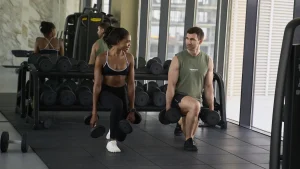
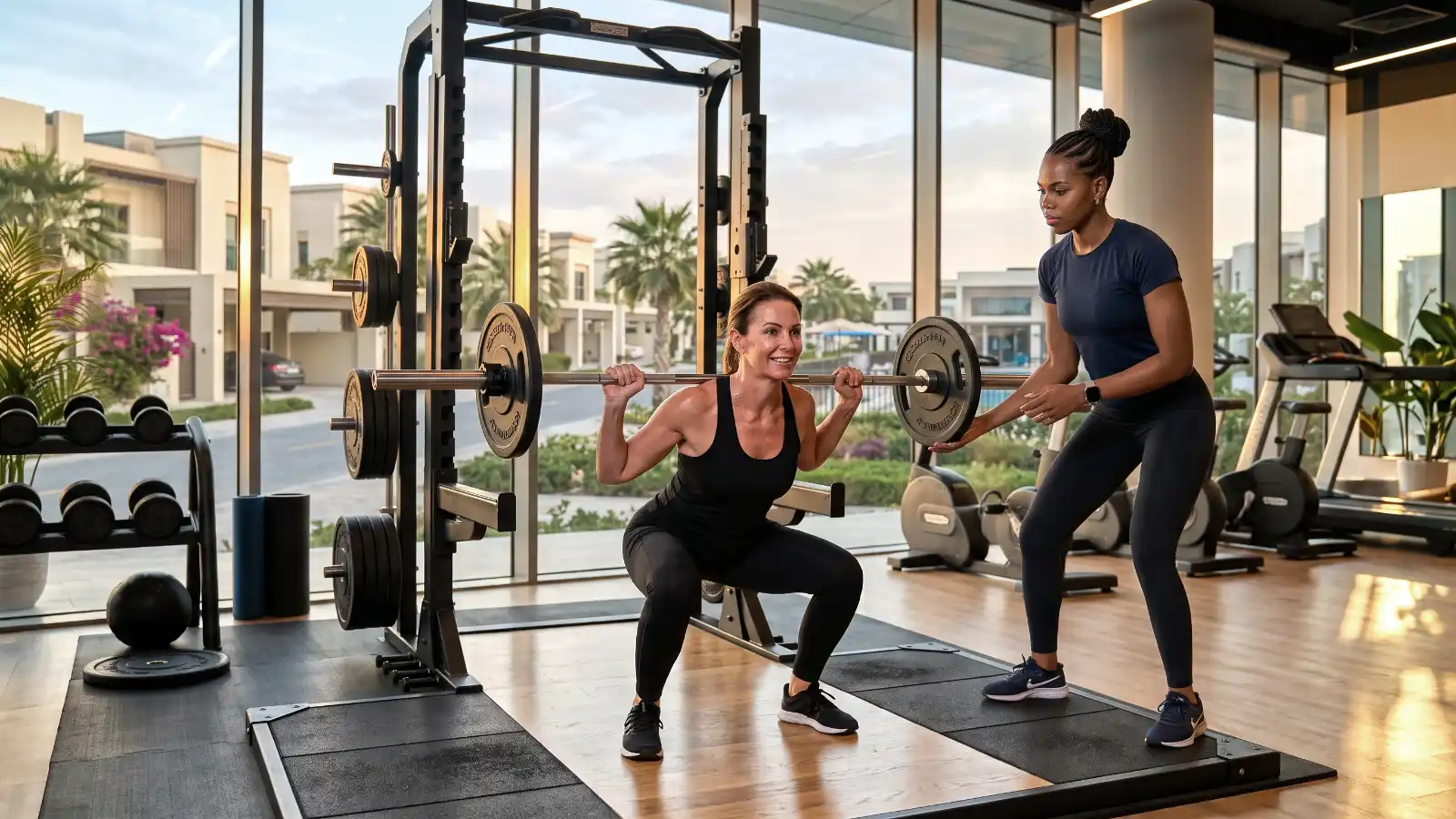
You might walk regularly, enjoy Pilates or have a building gym just a lift ride away. But picking up weights can still bring a whole new set of questions. Which exercises should you do? How heavy should you lift? And how do you make room for training when work, family and everything else already fill the week?
A good starting routine gives you clear answers and enough flexibility to fit your life. Whether you are completely new to strength training or returning after a break, you can begin with a few useful movements, learn how to perform them comfortably and build from there.
Start with a routine you can build on
Two full-body strength sessions each week are a practical starting point for many women over 40. Choose exercises you can control, begin with an amount of work you recover from comfortably, and increase the challenge as you get stronger. You can train at home or in a suitable gym.
Why Strength Training Matters for Women Over 40
Your fortieth birthday does not suddenly change the rules of training. Your health, experience and current activity tell us much more about where to begin. Someone who has lifted weights for years will need a different starting point from someone learning her first squat.
The menopause transition can add another layer. Natural menopause usually happens between 45 and 55, and symptoms vary considerably. Changes in sleep or how you feel may affect your routine, so it makes sense to work with what you are experiencing rather than assume every woman over 40 needs the same programme. WHO menopause guidance
Strength that makes a difference outside the gym
Think about what you would like to feel stronger doing. It could be carrying shopping, handling a suitcase, climbing stairs or progressing with your favourite exercises. Having a goal you recognise in everyday life makes it easier to understand why each movement is in your programme.
Resistance training can improve strength, muscle size and physical function in healthy adults. The American College of Sports Medicine’s 2026 position stand brings together 137 systematic reviews involving more than 30,000 participants, providing a substantial evidence base for those benefits. Currier and colleagues, ACSM position stand
The practical starting point is straightforward: choose suitable exercises, practise them regularly and gradually increase what you can do. Your early progress may be as simple as completing a movement with greater control or feeling confident enough to try the next weight.
Giving your bones attention too
Bone health deserves a place in the conversation, particularly during and after the menopause transition. A 2026 review of 34 studies in postmenopausal women reported benefits of strength training for strength, body composition and bone mineral density, with outcomes varying across the programmes and nutritional approaches studied. Walter and colleagues, 2026
What the LIFTMOR study tells us
The trial involved postmenopausal women with low bone mass, averaging about 65 years of age.
The supervised programme produced better spine and femoral-neck bone-density outcomes than a low-intensity home programme, alongside improvements in physical function.
Keep the context: Participants were screened and closely supervised through a specific, demanding protocol. The beginner session in this article is a different programme; these results cannot be assumed for it.
Read the LIFTMOR trialGetting stronger is a worthwhile achievement, but it does not confirm that your bone density has increased. If you have osteoporosis, training should fit within your wider care plan; it cannot promise to reverse the condition or replace treatment.
Why your weight tells only part of the story
The SWAN study followed women with repeated body-composition measurements across the menopause transition. During that transition, fat accumulation accelerated and lean mass declined, without a corresponding acceleration in overall weight gain. Changes in body composition therefore were not fully reflected in the pattern on the scale. SWAN body-composition study
The researchers measured lean mass, which includes water and organs as well as muscle. They also observed changes rather than testing a training programme, so the study cannot tell us that a particular workout prevents those changes. What it does illustrate is why your weight deserves some context. The exercises you can perform, the loads you can handle and how you feel doing everyday tasks are worth recording too.
How Often Should You Strength Train?
Start by finding two realistic training slots in your week. Monday and Thursday are one option, leaving time between sessions to recover and giving you regular opportunities to practise. Training the major muscle groups at least twice weekly fits the ACSM guidance, while the amount of work and exercise choices should reflect your goals and starting point. ACSM training recommendations
A third session can be useful when you have the time and recover well from the work. If you already follow a routine that is producing progress, review how it is working before changing it simply because of your age. The aim is to find a rhythm you can keep and develop.
Keep the activities you enjoy alongside your strength sessions. WHO recommends 150-300 minutes of moderate aerobic activity, or 75-150 minutes of vigorous activity, per week, plus muscle-strengthening activities on at least two days. If you are currently less active, build towards these amounts gradually. WHO physical activity guidelines
That could mean two strength sessions, brisk walks spread across the week and an optional Pilates class. The duration and intensity of those activities determine how they contribute to the recommendations. Our Pilates versus strength training guide explains how the approaches can fit together.
If walking is your main form of exercise and you are approaching or already over 60, our guide to whether walking is enough exercise after 60 explores where strength and balance training fit alongside your walks.
A Simple Full-Body Workout to Get Started
A short exercise list makes the first few weeks easier to follow. You have time to learn each movement, remember how to set up the equipment and notice when something starts to feel more comfortable.
The session below is a practical coaching example for generally healthy beginners. Your health, symptoms or previous injuries may call for different choices. Begin with one working set per exercise if you need a gentler introduction, then build towards the two sets shown as you become comfortable and recover well.
Repeat the session twice weekly to begin with. Allow roughly 35-50 minutes, including your warm-up, and take longer if you need additional rest.
Warm up and get familiar with the movements
Spend around five minutes walking, cycling easily or marching in place. Then practise the movements you are about to use with little or no weight. Before a more demanding exercise, a lighter practice set gives you a chance to check your setup and see how the movement feels that day.
Choose one suitable exercise from each row below. One repetition, or rep, is one complete movement. A set is a group of repetitions performed before you rest.
Five movements for your full-body routine
Choose one suitable exercise per row. Each sketch shows one option. Begin with one working set if needed, then build towards the two sets shown.
| Movement | Exercise options | Starting work | What to focus on |
|---|---|---|---|
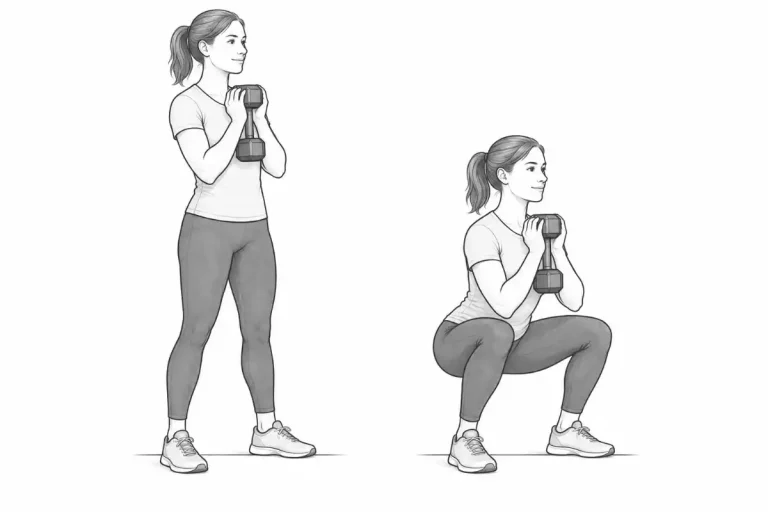
Squat
|
Sit-to-stand from a stable chair, goblet squat or leg press. | 2 sets of 8-12 reps | Use a comfortable range and lower yourself or the weight with control. |
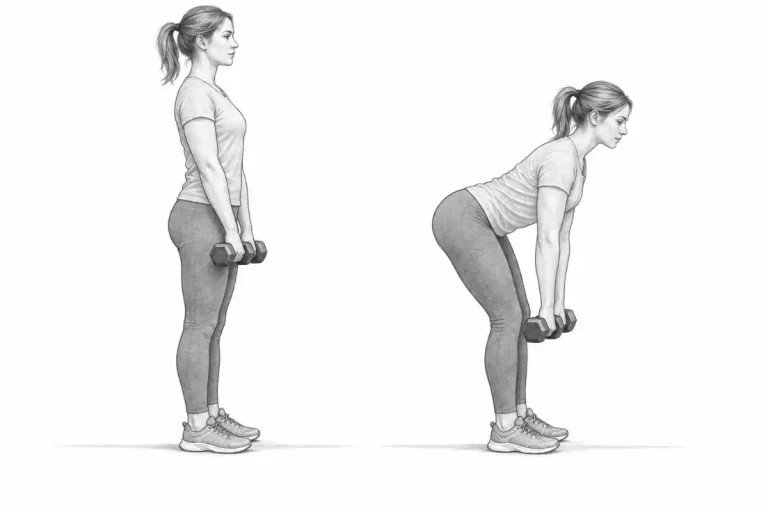
Hip hinge
|
Practise an unloaded hinge, then progress to a dumbbell Romanian deadlift. | 2 sets of 8-12 reps | Move your hips back and keep the weights close to your legs. |
Push
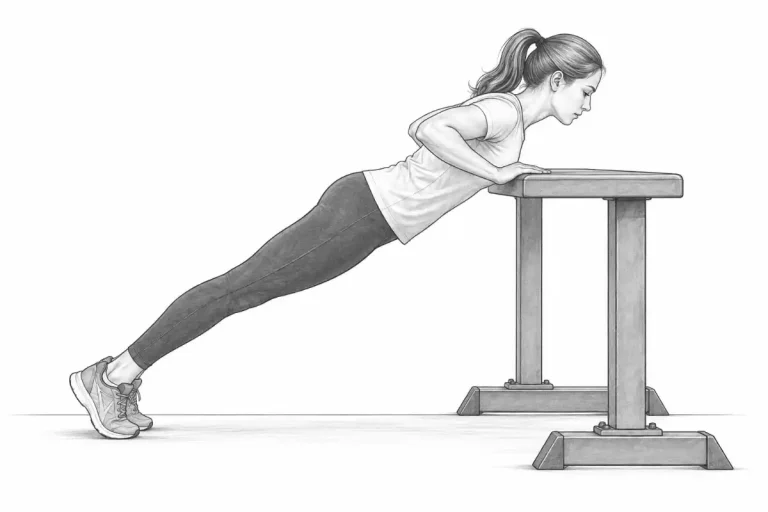
|
Incline push-up against a secure surface or machine chest press. | 2 sets of 8-12 reps | Choose a position that lets you press smoothly while keeping control of your body. |
Pull
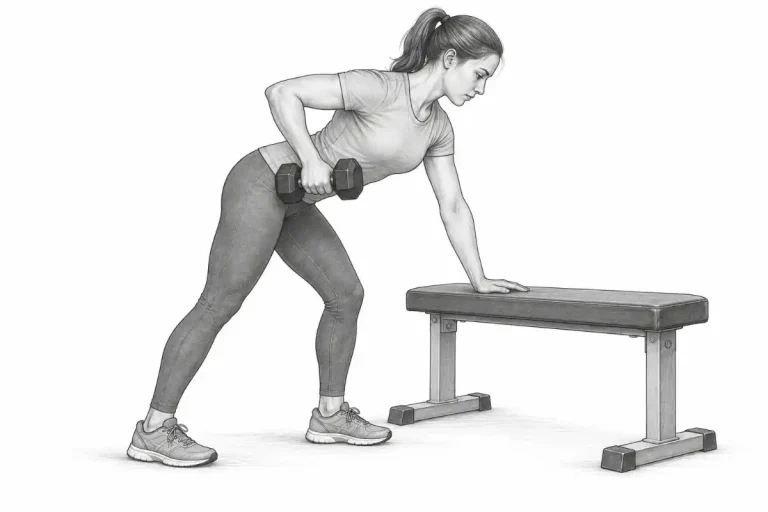
|
Supported one-arm dumbbell row or seated cable row. | 2 sets of 8-12 reps Each side for one-arm rows. | Keep your torso steady and avoid jerking the weight. |
Carry
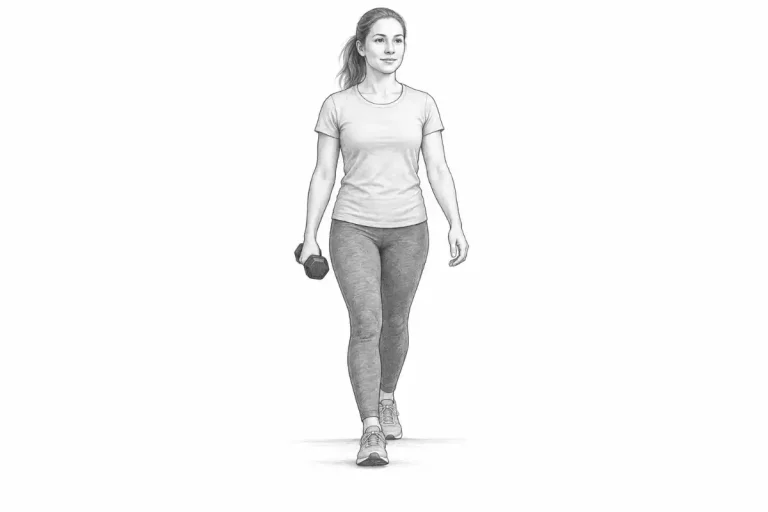
|
Suitcase carry with one dumbbell. | 2 carries of 20-30 seconds Each side. | Walk steadily through a clear space while keeping your torso upright. |
Rest around 90 seconds to two minutes between working sets, or longer when you need it. Give yourself enough time to repeat the exercise with control, keep breathing through the movement and use a range that feels comfortable.
An unfamiliar exercise is worth having demonstrated and checked before you add more weight. This is especially helpful with a hip hinge, where learning the movement comes first. Our guide to the core movements every beginner should master provides more background.
When you only have 20 minutes
Keep your warm-up, then complete one working set of each exercise, including both sides where relevant. Add second sets only when you have enough time to perform them without rushing or cutting necessary rest. If short sessions are what your schedule usually allows, build the regular plan around that.
After a missed workout, return to your normal routine at a level you can manage. You can leave the missed session behind without trying to fit twice the work into your next visit.
How to Choose Your Weights and Make Progress
The right starting weight is the one that suits the exercise and your current ability. Your squat, row and press may each need a different load, so assess them separately. A number on a dumbbell is useful for tracking your own training; it says very little about what someone else should lift.
Once you know the movement, aim to finish most working sets feeling you could complete another two or three repetitions with similar technique. This is called repetitions in reserve. It takes practice to judge, so start conservatively and use your next few sessions to get a better feel for it.
If control starts to break down before the bottom of your repetition range, reduce the weight or use an easier variation. If you reach the top comfortably with many more repetitions available, consider a small increase. You can make progress without testing your maximum lift or taking every set to muscle failure. ACSM evidence summary
A clear way to decide when to increase the weight
For an exercise programmed at two sets of 8-12 repetitions, keep the same weight while building repetitions within that range. Once you can complete both sets at 12 with good control and a couple of repetitions still available on two consecutive sessions, try the smallest practical weight increase. Your repetitions may then return towards the lower end of the range.
Here is how that could look for a supported dumbbell row. These are example weights and selected sessions, not suggested starting loads or a weekly deadline.
How your dumbbell row could progress
These are example weights and selected sessions, not suggested starting loads or a weekly deadline.
-
First recorded session
4 kg
Set 1: 10 reps
Set 2: 9 repsKeep practising with this weight.
-
A later session
4 kg
Set 1: 12 reps
Set 2: 12 repsRepeat to check that the work is consistently manageable.
-
Next session
4 kg
Set 1: 12 reps
Set 2: 12 repsA couple more reps are still possible. Try the smallest available increase next time.
-
Following session
4.5 kg
Set 1: 9 reps
Set 2: 8 repsIf this weight is available, build repetitions again with the new load.
Choose the increase carefully. Moving from 4 kg to 6 kg is a 50% jump. Use a load you can control and consider smaller increments or an adjusted exercise.
Some exercises will move forward faster than others. You may keep the same weight for several sessions while you improve your technique, add repetitions or work through a tiring week. Use your performance to make the decision.
What if the next dumbbell is too heavy?
Going from 4 kg to 6 kg is a 50% increase. That can be a substantial jump, particularly for an upper-body exercise, and there is no reason to force it just because those are the weights on the rack.
You could use equipment with smaller increments, adjust the exercise variation or have a coach review the repetition range. At home, adjustable dumbbells may help, but check what you already have access to before buying more equipment.
After each session, note the exercise, weight, repetitions and how difficult it felt. Over several weeks, look for more controlled repetitions, slightly heavier loads or greater confidence setting up and performing the movements. If progress slows, those notes help you review what has changed in your training, recovery or routine.
How to Adjust Training When Recovery Is Difficult
Some days, the warm-up feels easy and you are ready to follow the plan. On others, poor sleep or a demanding week catches up with you. A useful programme has room for both.
Treat the warm-up as a check-in. You can reduce the load, do fewer sets or rest when needed, while keeping the overall routine familiar.
How to approach today’s session
If your warm-up feels comfortable, follow the plan and progress when your recent performance supports it.
Consider a lighter load, fewer sets or a shorter session. Rest if you feel too unwell or exhausted to train comfortably.
Warm up gently and assess how you move. Reduce or change work that feels restricted or uncomfortable.
Stop that exercise and seek appropriate advice before repeatedly testing it under load.
Recurring exhaustion, declining performance or persistent pain deserves a closer look. Review the overall workload, and seek clinical assessment when symptoms are unexplained or keep returning. Stop exercising and seek urgent medical help for chest pain, fainting or severe unusual breathlessness.
If you notice leakage, pelvic heaviness or pelvic pain during exercise, arrange an assessment and adapt the activity. A pelvic health physiotherapist can help assess relevant symptoms and guide appropriate exercises; supervised pelvic floor training is one established approach for certain forms of urinary incontinence. The right support depends on what is causing the problem. NHS guidance on urinary incontinence treatment
Menopause symptoms that interfere with sleep or daily life also deserve support. Exercise has substantial health benefits, but the Menopause Society’s 2023 position statement found insufficient or inconsistent evidence to recommend it specifically as a treatment for hot flushes and night sweats. Your clinician can help you consider symptom management alongside a training routine that works for you. Menopause Society position statement
Protein and Everyday Nutrition
As you build your training routine, give your meals a little structure too. Include protein sources such as fish, chicken, eggs, dairy, tofu, beans or lentils, alongside vegetables, fruit, carbohydrates and fats that fit your preferences. Aim for meals you enjoy and can organise on an ordinary working day.
For protein planning, around 1.2-1.6 grams per kilogram of body weight per day can be a useful starting range for healthy adults who strength train. Nunes and colleagues discuss this range in the context of earlier adult research; it is general guidance rather than a target established specifically for women over 40. At 65 kg, the example works out to approximately 78-104 grams daily. Nunes and colleagues, 2022
Including a protein source at each main meal can make the daily amount easier to reach. Breakfast might include eggs or Greek yoghurt, lunch chicken or tofu, and dinner fish or a substantial bean or lentil dish. Protein powder is an option for convenience when organising enough food is difficult. If you have kidney disease or a prescribed dietary restriction, discuss changes with your clinician or dietitian.
If fat loss is also a goal, choose an eating approach that supports gradual weight management and leaves you able to train and recover. Workouts alone do not guarantee weight loss. Our nutrition coaching in Dubai can help you develop practical habits around your usual meals, schedule and responsibilities.
If you are using a GLP-1 medication for weight management, our guide to GLP-1 and strength training looks more closely at muscle preservation during weight loss.
Making Strength Training Work in Dubai
Being busy can feel physically tiring even when much of your day is spent sitting. Work, driving, school runs and family commitments can fill the calendar before you have had much opportunity to move. Pick two training windows you can realistically protect, allowing time for setup and travel as well as the workout.
Make your training location easy to use
A home routine or nearby building gym can make those appointments easier to keep. At home, you need a clear floor area, a stable support and enough space to handle the weights safely. In a building gym, check which dumbbells are available, how the machines adjust and whether the equipment suits the exercises in your plan.
If you want a trainer to join you, speak to building management before booking the first session. Ask whether external personal trainers are permitted, whether advance registration or documents are required, and whether access is limited to certain times or involves a fee. These are details to confirm with your own building.
Privacy and your preference for a female coach matter too. Choose a setting where you feel comfortable asking questions and practising new movements. Our comparison of home training, building gyms and commercial gyms in Dubai can help you work through the options.
Have a plan for hot days and travel
Keep a suitably cooled indoor option available when the weather makes outdoor activity uncomfortable. Your strength sessions and walks can happen in different places, and you can adjust both to the conditions and how you feel. For more ideas, see our guide to staying fit during the Dubai summer.
Before travelling, check whether your accommodation has suitable equipment and choose a few substitutions if needed. Shorter sessions may fit a busy trip more easily. After a break, use your first session back to assess how the exercises feel before returning to your previous loads.
Keep meals and social plans workable
Restaurant meals can fit around your training. Look for a useful protein source, include vegetables where possible, and choose portions and sides that suit your appetite and goals. Having a few reliable breakfast and lunch options can also make the week easier when evening plans are less predictable.
Before adding more sessions, check the basics: Can you keep your current appointments? Do you know what to do when you arrive? Does the equipment allow you to progress? Are you recording your training? Fixing one of those everyday problems may make your routine much easier to maintain.
Frequently Asked Questions
Is it too late to start strength training at 45, 50 or 60?
No. Your current health, ability and training history are the starting points. Studies such as LIFTMOR include women who benefited well beyond 60, although that trial used a closely supervised programme for a particular population. Begin with exercises you can manage and build according to your own response. LIFTMOR trial
Will lifting weights make me bulky?
No, taking up strength training does not automatically make you bulky. Muscle develops gradually, and the amount you gain depends on your training, nutrition, time and individual response. You can see how your body responds and adjust the programme to suit your preferences. Our guide to lifting weights and the fear of getting bulky explores this in more detail.
How long does it take to notice progress?
Early progress may show up as better coordination, more confidence or additional repetitions with the same weight. Visible body changes vary considerably, so review your training record over several weeks and give changes in appearance a longer perspective. Bone-density outcomes need clinical measurement and cannot be judged from how much you lift.
Can I start if I have never trained before?
Yes. Start with a few manageable movements and allow yourself time to learn the setup, control each repetition and judge the effort. One working set per exercise can be enough for your initial introduction. If you feel uncertain, coaching can help you learn the movements and choose suitable variations.
Do I need a gym or a personal trainer?
You can train at home with suitable space, enough resistance and a way to progress your exercises. Coaching is useful when you want help choosing movements, checking technique or adapting the plan. If your preference for a female trainer is part of the decision, our guide to whether you need a female personal trainer in Dubai can help you work through the considerations.
Can I strength train with osteoporosis?
Strength training can be part of an osteoporosis exercise plan, but the beginner session here may need changes. Your fracture history, symptoms and clinical recommendations influence exercise selection and loading. Work with an appropriately experienced professional within your healthcare guidance, particularly before attempting demanding resistance or impact exercises.
Get Help Building Your Strength Routine in Dubai
You may understand the plan and still want someone beside you when you try the exercises. At Fit with Rozzie, we help you choose suitable movements and starting weights, practise your technique and decide when to increase the challenge. As your confidence grows, your programme develops with you.
Our female personal training in Dubai is available at home, in villas and in suitable building gyms, depending on location, facility access and coach availability. Explore our trainer matching process to see how we help you find the right support.
Tell us your Dubai area, where you would like to train and what you would like to feel stronger doing. During your free consultation, we will talk through your experience, schedule and the coaching setup that suits you.
Scientific Sources
- Currier and colleagues, 2026: ACSM position stand on resistance training in healthy adults. Medicine & Science in Sports & Exercise. See also the ACSM practical summary.
- World Health Organization: Menopause fact sheet.
- Walter and colleagues, 2026: Review of strength training and nutritional strategies in postmenopausal women. Sports Medicine – Open.
- Watson and colleagues, 2018: The LIFTMOR randomised controlled trial. Journal of Bone and Mineral Research.
- Greendale and colleagues, 2019: Body-composition and weight changes across the menopause transition. JCI Insight.
- World Health Organization, 2020: Physical activity and sedentary behaviour guidelines.
- The North American Menopause Society, 2023: Position statement on nonhormonal treatment of vasomotor symptoms.
- Nunes and colleagues, 2022: Review of protein intake, muscle mass and function in healthy adults. Journal of Cachexia, Sarcopenia and Muscle.
- NHS: Treatment options for urinary incontinence.