
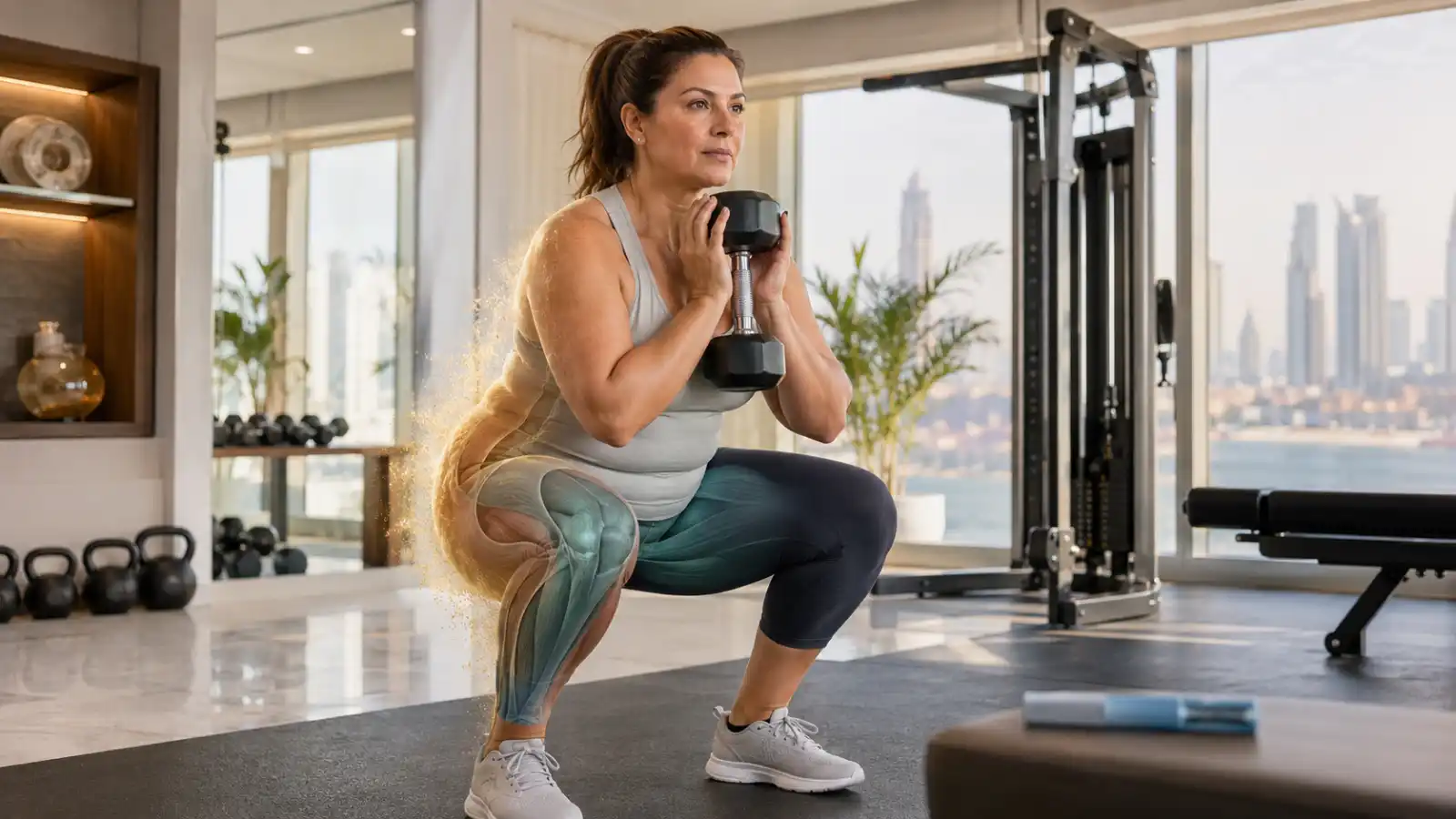
If you are losing weight with a GLP-1-based medication such as Ozempic, Wegovy, Mounjaro or Zepbound, a falling number on the scale can feel like a major success.
But the quality of that weight loss matters. The goal is to reduce excess body fat while preserving as much strength, muscle and physical function as reasonably possible.
Some lean body mass is commonly lost during substantial weight reduction. Current research, however, suggests that GLP-1 medications do not necessarily cause disproportionate muscle wasting.
Resistance training, sufficient protein, regular movement and appropriate medical supervision can help you achieve better-quality weight loss and remain physically capable throughout the process.
Quick Answer
GLP-1-based weight loss can include some loss of lean body mass, but lean mass is not the same as skeletal muscle. It also includes water, organs, connective tissue and other fat-free components.
Most weight lost with GLP-1-based treatment appears to come from fat, and modest reductions in muscle size do not automatically cause declining strength or function.
For most medically cleared adults, a sensible foundation includes progressive resistance training two or three times per week, regular daily movement and sufficient overall nutrition. A commonly suggested protein range during active weight loss is approximately 1.2 to 1.6 grams per kilogram of body weight per day, although individual needs vary.
What Are GLP-1 Medications?
GLP-1 stands for glucagon-like peptide-1, a hormone involved in appetite, digestion and blood glucose regulation.
Semaglutide-based medications mimic some GLP-1 effects. Tirzepatide acts on both GIP and GLP-1 receptors, although it is often included in broader discussions about GLP-1-based weight-loss treatment.
These prescription medications can reduce appetite, increase fullness and slow gastric emptying. Questions about suitability, dosage or side effects belong with a licensed medical professional. A personal trainer should never advise you to begin, stop or change prescribed medication.
Do GLP-1 Medications Cause Muscle Loss?
Substantial weight loss can reduce fat mass, lean body mass and sometimes skeletal muscle. However, these terms should not be used interchangeably.
Lean mass is not pure muscle. It includes skeletal muscle, water, organs, bones, connective tissue and stored substances such as glycogen. A scan showing three kilograms of lost lean mass therefore does not prove that three kilograms of contractile muscle tissue have disappeared.
In some studies, approximately 25 to 40 percent of total weight loss during GLP-1-based treatment has been attributed to lean body mass. The exact proportion varies by medication, person, study design and measurement method.
The SURMOUNT-1 body-composition substudy, for example, found that approximately three quarters of the weight lost with tirzepatide came from fat mass and one quarter from lean mass.
Muscle size and muscle function are also different. A 2026 study published in Cell Reports Medicine found that around 70 percent of the weight lost in its small human trial came from fat. Muscle size decreased modestly, while knee-extension strength and handgrip strength were maintained.
The trial involved only ten participants and lasted twelve weeks, so larger studies are still needed. Even so, the results did not support the idea of disproportionate or pathological muscle loss.
A person may lose a small amount of absolute muscle while becoming more mobile because they are carrying less excess body weight. What matters is not only what a scan reports, but also whether strength, movement and everyday function are being maintained.
Why Strength Training Matters During GLP-1 Weight Loss
Resistance training provides a direct signal that your body still needs strength and muscle tissue while calorie intake is reduced.
The 2026 American Diabetes Association Standards of Care recommend combining attention to protein intake with resistance training when preserving lean mass during weight-loss treatment.
Train the major movement patterns. A balanced full-body program may include a squat or sit-to-stand, hip hinge, push, pull, single-leg movement, core exercise and loaded carry. These can be trained with body weight, bands, dumbbells, machines or cables.
Progress gradually. Progress may mean adding a little resistance, completing another controlled repetition, improving technique or moving to a more challenging variation.
Adapt lower-energy sessions. If appetite or energy drops, use lighter resistance, complete fewer sets, rest longer or shorten the session. A focused 30-minute workout is more useful than repeatedly skipping training because you cannot complete the perfect plan.
Fit with Rozzie provides structured personal training in Dubai at home, in villas and in suitable residential gyms.
Protect Your Strength While Losing Weight
Using a medically prescribed GLP-1 medication and unsure how to train? Fit with Rozzie can help you build a structured strength plan around your fitness, energy levels and preferred training environment.
A Simple Weekly Training Framework
The following is an example for a medically cleared beginner, not a universal prescription.
| Day | Training focus |
|---|---|
| Monday | Full-body strength training |
| Tuesday | Walking and gentle mobility |
| Wednesday | Recovery and normal daily movement |
| Thursday | Full-body strength training |
| Friday | Walking, cycling or another low-impact activity |
| Saturday | Optional mobility or recreational movement |
| Sunday | Recovery and preparation |
A third strength session may be added when experience, goals and recovery allow.
An observational analysis presented at ENDO 2026 found that physical activity declined after participants started GLP-1 treatment.
The study cannot prove that the medication caused the change. Fatigue, nausea, pain, changes in routine and individual motivation may all contribute. It nevertheless reinforces why weight loss should be supported by an intentional movement plan.
Protein and Nutrition During GLP-1 Weight Loss
Protein supplies the amino acids needed to maintain and repair muscle tissue. Because GLP-1-based medications suppress appetite, some people unintentionally reduce their protein intake along with everything else.
A 2024 systematic review and meta-analysis found that increased protein intake helped reduce the decline in muscle mass during weight loss. Protein did not consistently preserve strength or function on its own, which is why it should be combined with resistance training.
A practical starting range for many active adults losing weight is approximately 1.2 to 1.6 grams per kilogram per day. For a 70-kilogram person, that equals about 84 to 112 grams.
For a general starting estimate, our Protein & Macro Calculator can help translate your body weight and calorie intake into a daily protein target. Individual medical conditions and prescribed nutrition plans still require professional guidance.
This is not a fixed prescription. Age, body composition, activity, total calorie intake and medical conditions all matter. People with kidney disease or another condition affecting protein requirements should seek individualized guidance.
Make smaller meals count. Spreading protein across three or four smaller meals may be easier than eating one large meal. Useful options include eggs, Greek yogurt, cottage cheese, fish, chicken, lean meat, tofu, tempeh, lentils, beans and protein shakes.
Our guide on how to balance your plate explains how to combine protein with vegetables, carbohydrates and healthy fats.
For deeper support, nutrition coaching in Dubai can help you build a realistic meal structure around your appetite, routine and training. Nutrition coaching does not replace medical nutrition therapy or advice from your prescribing clinician.
Hydration and Who Needs Extra Care
Reduced appetite can affect hydration and overall nutrient intake, not only protein.
Nausea, vomiting or diarrhea can increase dehydration risk, especially when training in Dubai. Persistent gastrointestinal symptoms, unusual weakness or difficulty eating adequately should be discussed with your prescribing clinician.
Closer attention may be needed if you are older, physically inactive, starting with low muscle mass, going through or beyond menopause, losing weight very rapidly or managing a condition that affects mobility.
Routine supplementation is not automatically necessary. Your healthcare provider may recommend nutritional assessment or laboratory testing based on your symptoms and medical history.
Older clients who need more closely adapted exercise can explore active aging and mobility coaching in Dubai.
How to Track Your Progress
The scale cannot tell you whether strength, mobility and quality of life are improving.
Useful progress markers include:
- Resistance and repetitions in key exercises
- Exercise technique and control
- Walking pace and balance
- Energy during everyday activities
- Ability to climb stairs or carry groceries
- Waist circumference
- Consistency with training and meals
Consumer smart scales are strongly influenced by hydration and should not be treated as precise measurements of muscle change. Look at trends across several weeks rather than one isolated result.
Speak to your healthcare provider if you experience ongoing vomiting, significant dehydration, fainting, persistent dizziness, severe weakness, an inability to eat adequately or a rapid decline in normal physical function.
Do not stop or alter prescribed medication based on advice from a trainer, influencer or online article.
Can a Personal Trainer Help?
A qualified personal trainer can assess your starting strength, choose suitable exercises, teach safe technique, adjust training around your recovery and monitor changes in strength and function.
A trainer should remain within their professional scope. They should not diagnose side effects, prescribe medication, change your dose or promise that every reduction in lean mass can be prevented.
Fit with Rozzie offers personalized training at homes, villas and suitable building gyms across Dubai. The Personal Trainer Match Dubai service can help you find a coach based on your goals, location and preferred coaching style.
What Are Researchers Studying Next?
Researchers are testing whether future treatments could preserve more lean mass during pharmacological weight loss.
In a small 24-week phase 2 trial published in Nature Medicine, the experimental antibody apitegromab reduced lean-mass loss when combined with tirzepatide. However, it did not establish a clear improvement in physical function.
Apitegromab remains investigational. For now, resistance training, appropriate nutrition, regular movement and medical supervision remain the most practical foundations.
Frequently Asked Questions
Can I lift weights while taking Ozempic, Wegovy or Mounjaro?
Many people can perform strength training while using medically prescribed GLP-1-based treatment. Your doctor should confirm whether you have medical restrictions, while your trainer adapts the workload to your current fitness and energy.
Will strength training completely prevent muscle loss?
Not necessarily. Resistance training can support muscle preservation, strength and function, but no responsible coach can guarantee that every reduction in lean mass will be prevented.
Is walking enough to preserve muscle?
Walking supports cardiovascular health and daily movement, but it does not provide the same muscle-preserving stimulus as progressive resistance training. Medically cleared adults should ideally include both.
Is 1.2 to 1.6 grams of protein per kilogram necessary for everyone?
No. It is a general starting range, not a universal prescription. Individual needs depend on age, size, activity, diet and health.
Should I stop my medication if I feel weaker?
Do not stop or change prescribed medication without speaking to your doctor. A noticeable decline in strength, energy, food intake or function should be medically reviewed.
The Bottom Line
GLP-1-based medications can support substantial weight loss, but the best outcome is not simply the lowest number on the scale.
Current evidence does not suggest that these medications inevitably cause disproportionate muscle wasting. Some lean mass may be lost, but lean mass is not identical to skeletal muscle, and a modest reduction in muscle size does not automatically mean strength or function will decline.
You can influence the quality of your weight loss through progressive resistance training, adequate nutrition, regular movement, hydration, recovery and medical supervision.
You do not need an extreme plan. You need a realistic system that gives your body a reason to remain strong while your weight changes.
Lose Weight Without Losing Sight of Strength
Build a personalized strength and nutrition plan around your current fitness, schedule and medically supervised weight-loss journey. Train privately at home, in your villa gym or in a suitable residential gym across Dubai.
This article is intended for general education and does not constitute medical advice. Always discuss medication, symptoms and medical concerns with a qualified healthcare professional.
Scientific Sources
- Langer HT, et al. Weight loss with GLP-1 medicines does not result in a disproportionate loss of muscle mass or function in obese mice and humans. Cell Reports Medicine. 2026;7(3):102665.
- Look M, et al. Body composition changes during weight reduction with tirzepatide in the SURMOUNT-1 study of adults with obesity or overweight. Diabetes, Obesity and Metabolism. 2025;27(5):2720–2729.
- Kokura Y, et al. Enhanced protein intake on maintaining muscle mass, strength, and physical function in adults with overweight or obesity: A systematic review and meta-analysis. Clinical Nutrition ESPEN. 2024;63:417–426.
- American Diabetes Association Professional Practice Committee. Obesity and Weight Management for the Prevention and Treatment of Type 2 Diabetes: Standards of Care in Diabetes 2026. Diabetes Care. 2026;49(Supplement 1).
- Pratley RE, et al. Apitegromab for lean mass preservation during tirzepatide-induced weight loss: a randomized, double-blind, placebo-controlled phase 2 trial. Nature Medicine. 2026.