
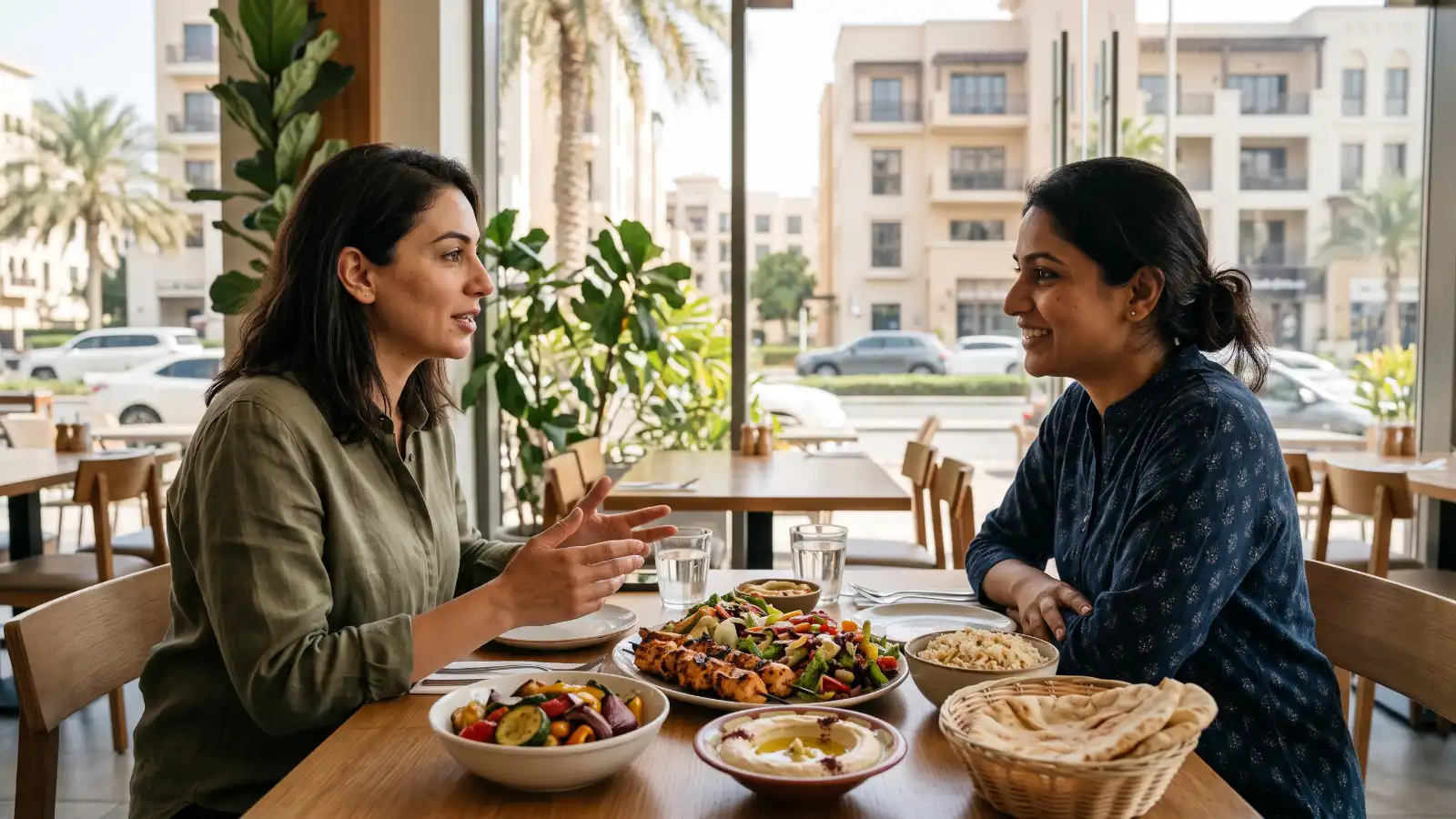
A business lunch during the week. Dinner with friends. A hotel brunch at the weekend. Then a delivery order because you get home late and there is nothing ready to eat.
If that sounds familiar, your nutrition plan needs to work with restaurant food. A routine that depends on preparing every meal at home will be difficult to maintain in Dubai.
You can enjoy eating out and still work towards weight loss. The useful skills are knowing how to build a satisfying meal, choose portions and notice the extras that are easy to overlook.
Quick Answer
Can You Eat Out in Dubai and Still Lose Weight?
Yes. Weight loss requires a calorie deficit over time, and restaurant meals can fit within that. Include protein and vegetables, choose portions that suit your needs, and pay attention to sauces, drinks and serving sizes. Eat normally beforehand and return to your usual routine afterwards.
Eating Out at a Glance
Why Restaurant Meals Can Make Weight Loss Harder
Restaurant meals can be larger and richer than the meals you prepare at home. Oil, butter, cream, dressings and drinks can also contribute more energy than you expect from looking at the plate.
A multi-country study published in the BMJ measured substantial energy content in both full-service and fast-food restaurant meals. It did not include Dubai, so its findings should be understood as a general pattern rather than local menu estimates.
Portion size itself can influence how much we eat. In a restaurant study by Diliberti and colleagues, customers served a larger main course ate more across the meal.
That does not make restaurant food off limits. It gives you a reason to consider the whole order, rather than assuming that the portion served is automatically the right amount for you.
Before You Go: Plan Without Skipping Meals
Keep your usual breakfast and lunch on the day of a restaurant dinner. If dinner is late and you are hungry in the afternoon, have a familiar snack, such as plain yogurt with fruit or an egg with toast.
Skipping meals does not automatically cause overeating. However, arriving extremely hungry can make portions harder to judge for some people. NIDDK’s guidance on food portions recommends regular meal times and notes that delaying or skipping meals may lead to eating more later.
Look at the menu beforehand if it is available. Find a couple of meals you would enjoy and check whether vegetables, rice, bread or sauces come with them. This makes ordering easier once you are busy talking.
Think about what you are looking forward to most. Perhaps it is a particular pasta dish or sharing dessert with a friend. You can make room for that without restricting the rest of your day.
Build a Restaurant Version of the Balanced Plate
You do not need to measure your dinner at the table. A simple plate structure can help you put a meal together, including when food arrives in bowls or shared dishes.
Your Restaurant Plate
About half: vegetables
Salad, grilled vegetables or a vegetable side.
About a quarter: protein
Fish, chicken, eggs, tofu, beans or lentils.
About a quarter: carbohydrates
Rice, potatoes, bread, noodles or pasta.
Use this as a flexible starting point. Plate proportions do not set the total amount of food you need. Adjust portions to your appetite, activity and goals. Beans and lentils provide both protein and carbohydrates; added fats and sauces also count towards the meal.
For example, a chicken skewer plate might need an extra salad. A vegetable noodle dish might need tofu or prawns. A large pasta dish might work well with a vegetable side and some leftovers.
Protein can help make a meal satisfying. A review by Leidy and colleagues found a modest increase in fullness after higher-protein meals, although the acute studies did not establish that people ate less at the next eating occasion. Protein is useful, but it does not make portion size irrelevant.
You can also have more than one carbohydrate food. Rice and bread can fit into the same meal if the portions suit your needs. The important question is how much you are eating overall.
For the everyday version of this approach, read How to Balance Your Plate.
Build Confidence Beyond the Restaurant
Want a simple foundation for everyday food choices? The Simplified Nutrition Guide covers balanced meals, portions and eating out. Available for AED 49.
Brunch, Business Lunch, Buffet and Delivery: What Changes?
Business Lunch: Look at the Whole Set Menu
A two- or three-course deal can make ordering feel automatic. Consider the courses together. If your main is rich and filling, a vegetable starter may complement it. If dessert is the part you really want, you may prefer a simpler main.
For example, a tomato salad followed by grilled fish, potatoes and vegetables gives you a clear meal structure. If you choose pasta instead, consider whether you also want the bread basket and a starter.
You can enjoy a starter and dessert together when the portions work for you. You also do not have to finish every course because it is included in the price.
Dubai Brunch: Choose Your Favourites Before You Start
Before filling your plate, look around the buffet or read the sharing menu. Notice the dishes you actually want. Build a meal with protein, vegetables and a carbohydrate, then include the favourites that make the occasion enjoyable.
At a sharing brunch, put a portion on your own plate so you can see what you are eating. Pause between rounds and check whether you are still hungry. You can continue enjoying the conversation after you have finished eating.
Consider the drinks package too. A non-alcoholic package can still include juice, sweetened mocktails and soft drinks. Choosing water or an unsweetened drink for some rounds is a simple way to manage the overall order.
Buffet Dinner: Make Each Visit Deliberate
A buffet offers several possible meals at once. Choose a combination that works together, such as fish, rice and vegetables, instead of automatically taking a little of every main course.
Sit down and enjoy your food before deciding whether you want more. If you are still hungry, go back. If you want dessert, choose something you enjoy and give it the same attention as the meal.
You do not have to sample every option to get value from the evening.
Hotel Breakfast: Make the First Plate a Meal
An omelette with vegetables, toast and fruit is one option. Plain yogurt with oats and fruit is another. Eggs, ful medames and grilled tomatoes can also work well.
If you want a pastry or pancakes, include a portion you enjoy. They can sit alongside other breakfast foods. Pay attention to repeated glasses of juice or sweetened coffees, which can become a larger part of breakfast than intended.
Delivery: Check the Basket Before Checkout
Decide on your meal before browsing every offer. Then check what has been added through a meal upgrade: fries, extra bread, dips, dessert and a drink may all have appeared alongside your original choice.
For a rice bowl, you might choose chicken or tofu, vegetables, rice and sauce separately. For a burger order, you might add a side salad or share fries if that is what you want.
When the food arrives, plate your meal so you can see the portion. If there is more than you need, save the rest and refrigerate leftovers promptly. The container does not have to represent one meal.
What to Order: Examples Across Four Cuisines
The examples below show how to put a meal together. Recipes, portions and cooking methods vary between restaurants, so these are practical combinations rather than fixed-calorie orders.
Restaurant Orders by Cuisine
| Cuisine | A meal to try | What to notice | A practical adjustment |
|---|---|---|---|
| Lebanese | Shish tawook, salad or grilled vegetables, rice or pita, and some hummus. | Repeated bread refills, large dip portions, toum and oily dressings. | Put shared foods on your plate. Ask for extra sauce separately. |
| Indian | Tandoori chicken or fish, vegetables, rice and raita. A plant-based option is dal or chana with vegetables and roti. | Oil, ghee, cream, fried starters and the combined amount of rice and naan. | Share sides if useful. For biryani, serve a portion and add salad or raita. |
| Italian | Tomato-based pasta with prawns or chicken and a side salad, or pizza with vegetables alongside. | Large portions, cream sauces, extra cheese and bread with oil. | Enjoy the dish you want. Share or save some if the serving exceeds your appetite. |
| Japanese, Thai or Chinese | Fish, chicken or tofu with vegetables and rice; sushi with edamame; or noodles with protein and vegetables. | Tempura, mayonnaise, sweet sauces, coconut-rich curries and cooking oil. | Ask about preparation. Request extra sauce separately or less oil where possible. |
You do not need to abandon your favourite dishes. If you want biryani, serve a portion and add salad or raita. If you want a creamy pasta, consider how much you want and whether you also need several sides.
Simple requests can help: “Could I have the dressing separately?” or “Could we share the rice and have a vegetable side?” Some dishes are prepared in advance, so a restaurant may not be able to change the sauce or cooking method.
Sauces, Oils, Starters and Drinks: Notice the Whole Order
Olive oil, tahini, hummus, nuts and cheese can all fit into a balanced diet. Their portions still matter. A meal can become much richer when several of these are added together.
Ask for dressings, dips and extra sauces separately where practical. You can then use an amount you enjoy. A grilled dish may still contain added oil or butter, so ask how it is prepared if that helps you choose.
With shared starters, put a portion on your plate instead of repeatedly reaching into the bread basket or dipping bowl. This makes the amount easier to see while still allowing you to enjoy the food.
Water, sparkling water and unsweetened drinks are useful defaults. If you choose juice, a sweetened coffee, a mocktail or alcohol, consider it as part of the meal rather than an addition you forget to account for.
For larger mains, pause during the meal. You can share a dish or take leftovers home when the amount served exceeds your appetite.
Do You Need to Count Restaurant Calories?
You can start with meal structure and portions. A “wellness”, vegan or gluten-free label does not, by itself, tell you whether a dish suits your energy needs.
If you already track calories and the restaurant publishes nutrition information, check whether the number includes sides, sauces and drinks. Treat it as guidance rather than an exact measurement of your individual plate.
Without that information, make a reasonable estimate that reflects the preparation. A creamy restaurant curry is unlikely to match an app entry for plain cooked chicken. You do not need to spend the evening searching for a perfect number.
If you eat out frequently and progress has stalled over several weeks, review repeat orders, portions and drinks. Change one regular habit and observe the trend. For the wider goal, read Weight Loss vs. Muscle Gain: What I’d Do Differently.
Why Your Weight May Rise After a Restaurant Meal
A higher number the next morning is not a direct measurement of fat gained. Several things can contribute to the change.
Salt can increase water retention. The American Heart Association explains that excess sodium can cause water retention and weight gain.
Carbohydrate storage is associated with changes in body water. Carbohydrate is stored as glycogen. A small study of carbohydrate loading illustrates the relationship between glycogen replenishment and increased body water. That sports setting cannot predict exactly what happens after your dinner.
Food and fluid have weight too. A larger or later meal can leave more contents in your digestive system when you weigh yourself.
A restaurant meal can also contribute to an energy surplus. It would therefore be inaccurate to promise that every increase is only water. A single morning’s reading cannot separate these factors or tell you your longer-term fat trend.
If you weigh yourself, compare readings under similar conditions and look at the pattern over time. Avoid changing your entire plan in response to one dinner.
What to Do the Next Day
Your Next-Day Plan
-
Return to regular meals. Include protein, vegetables or fruit, and enough food to support your day.
-
Drink normally. Follow your usual hydration routine. You do not need a detox or forced litres of water.
-
Keep your usual movement. Walk or train as planned, with normal adjustments for how you feel.
-
Use what you learned. If you felt uncomfortably full, choose one small change for your next visit.
If you wake up less hungry after a late dinner, your next meal can reflect that. There is a difference between responding to appetite and deliberately fasting to compensate for what you ate.
You do not need to earn the meal through exercise or erase it afterwards. If repeated restriction is making your routine harder to maintain, read Why Diets Don’t Work Long-Term.
My Recommendation: Make Eating Out Part of Your Routine
My recommendation is to practise a few decisions you can repeat: include protein, add vegetables, notice portions and choose the extras you enjoy. Use those skills at the business lunch, the family dinner and the delivery order.
Some meals will be larger than others. Your progress depends on the pattern you maintain, including how you return to your routine afterwards. A useful nutrition plan should leave room for your goals and your social life.
Need a Restaurant Strategy That Fits Your Week?
Nutrition Coaching with Fit with Rozzie helps you build a practical routine around your goals, training, restaurant meals and busy workdays.
Book Your Free ConsultationFrequently Asked Questions
Can I Eat Restaurant Food Several Times a Week and Lose Weight?
Yes, if your overall intake supports a calorie deficit over time. The frequency alone does not decide the result. Your regular orders, portions, preparation methods and drinks all matter.
Do I Need to Avoid Rice, Bread or Pasta When Eating Out?
No. Choose amounts that suit your needs and build the rest of the meal around them. You can include smaller portions of more than one carbohydrate food if you prefer.
Is a Salad Always the Best Restaurant Order for Weight Loss?
No. A salad may be a satisfying meal, or it may contain little protein and leave you hungry. Dressing, cheese, nuts and fried toppings also affect its energy content. Consider the whole dish.
Should I Skip Breakfast After a Big Dinner?
You do not need to skip a meal to compensate. Follow your appetite and return to your usual meal pattern. One larger dinner does not require a punishment plan the following morning.
Scientific Sources
These sources support the guidance on portions, satiety and short-term weight changes. The menu combinations and ordering examples are practical applications rather than tested Dubai restaurant meal plans.
- Roberts et al. (2018). Measured energy content of frequently purchased restaurant meals: multi-country cross sectional study. BMJ, 363:k4864.
- Diliberti et al. (2004). Increased portion size leads to increased energy intake in a restaurant meal. Obesity Research, 12(3):562-568.
- Leidy et al. (2015). The role of protein in weight loss and maintenance. American Journal of Clinical Nutrition, 101(6):1320S-1329S.
- National Institute of Diabetes and Digestive and Kidney Diseases. Food Portions: Choosing Just Enough for You.
- American Heart Association. Effects of Excess Sodium.
- Shiose et al. (2016). Segmental extracellular and intracellular water distribution and muscle glycogen after 72-h carbohydrate loading using spectroscopic techniques. Journal of Applied Physiology.