
If you’re new to fitness, stop worrying about complex machines and fancy routines! The secret to getting strong, feeling confident, and staying injury-free for life is learning the seven core movements your body was built for.
These are the fundamental, real-life actions we do every day—from sitting down to picking up a child. Mastering them is the fastest way to build a strong foundation.
The Lower Body Powerhouse
Your legs and hips are the engine for daily life. Get these three right!
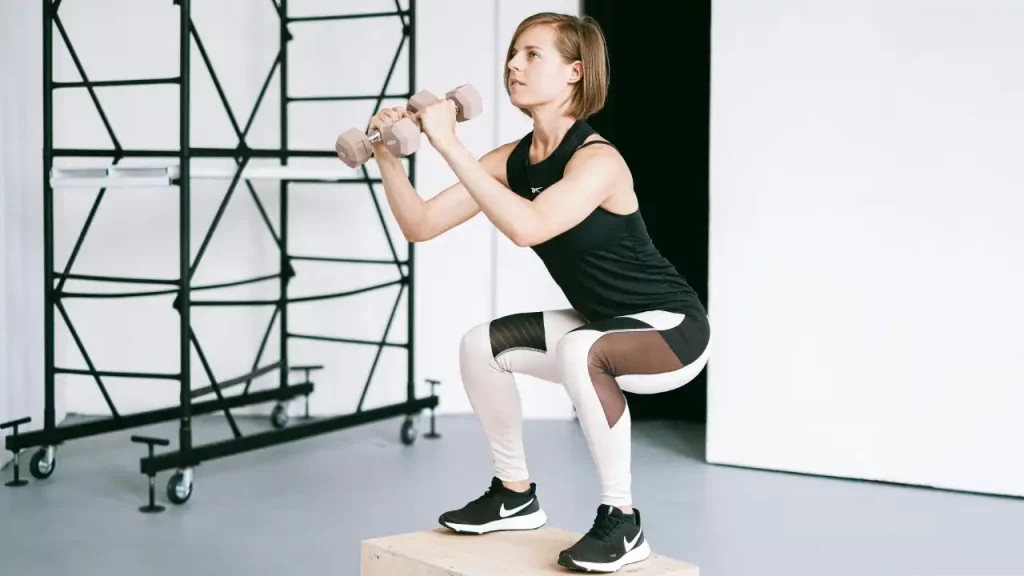
- The Squat (The Sit-Down)
- What it is: Bending your knees and hips as if you are sitting into a chair.
- The Fact: This is a full-leg builder that makes standing up from a sofa, getting off the toilet, or getting in and out of your car effortless. It strengthens the front and back of your legs at the same time and protects your joints by keeping them mobile.
- Start Here: Bodyweight Squat (practice with a chair behind you).
- The Hinge (The Pick-Up)
- What it is: Bending forward by pushing your hips straight backward, keeping your back totally flat. Your knees should only have a slight bend.
- The Fact: This move teaches you to use your glutes and hamstrings (the most powerful muscles you have!) to lift things. When you get this right, you stop using your back muscles incorrectly, which is the absolute best way to prevent lower back pain when lifting groceries, kids, or boxes.
- Start Here: Romanian Deadlift (RDL) with no weight, focusing on pushing your hips back.
- The Lunge (The Step-Up)
- What it is: Stepping forward, backward, or to the side, and lowering your body so your feet are in a staggered, split stance.
- The Fact: You rarely use both legs equally. Lunges strengthen each leg individually, which fixes those annoying strength differences between your left and right sides. This dramatically improves your balance and stability when you’re moving fast, stepping over obstacles, or climbing stairs.
- Start Here: Reverse Lunge (stepping back is easier on the knees).
Upper Body: Push & Pull for Posture
These two movements balance your upper body, fighting that “desk hunch” many of us have.
- The Push (The Reach Away)
- What it is: Moving an object or yourself away from your body (e.g., a push-up or lifting a carry-on bag into an overhead bin).
- The Fact: This move builds your chest, shoulders, and triceps. You need strong pushing muscles to be able to protect your shoulder joints and perform those high-reach, overhead tasks without strain.
- Start Here: Wall Push-Ups (for horizontal strength).
- The Pull (The Bring Close)
- What it is: Moving an object or your body toward you (e.g., pulling open a heavy door or pulling yourself up).
- The Fact: Pulling strengthens your back muscles (the lats and upper back) and your biceps. This is your anti-hunch posture fix—it pulls your shoulders back and down, counteracting the slouched position we often adopt while texting or typing.
- Start Here: Dumbbell Bent-Over Row (a great full-back developer).
Core & Total Body Control
These two are about keeping you stable and strong from head to toe.
- The Rotate / Anti-Rotate (The Stability Test)
- What it is: The ability of your core muscles to either twist your body (rotation) or, more importantly, stop your body from twisting when something tries to push you sideways.
- The Fact: Your core’s main job isn’t to crunch; it’s to stabilize your spine. Training your core to resist being pulled or pushed (anti-rotation) is the most powerful thing you can do to protect your lower back during fast movements or heavy lifts.
- Start Here: Pallof Press (focus on keeping your torso perfectly still).
- Gait / Carry (The Full-Body Challenge)
- What it is: The simple act of walking while holding heavy things (e.g., a “Farmer’s Walk”).
- The Fact: Carrying heavy weights forces every single muscle in your body—from your neck down to your feet—to work together to keep you upright. This move dramatically improves your grip strength and overall core stability, both of which are strongly linked to how long and how well you stay active as you age.
- Start Here: Farmer’s Carry (walk with a dumbbell in each hand for 30 seconds).
Master these seven core patterns, and you won’t just look fit – you’ll be functionally fit for life.