Introduction
Most people are not failing because they are lazy.
They are failing because they are tired, overwhelmed, inconsistent, and trying to force their body into a routine that does not actually fit their life.
I know this because I used to be that person.
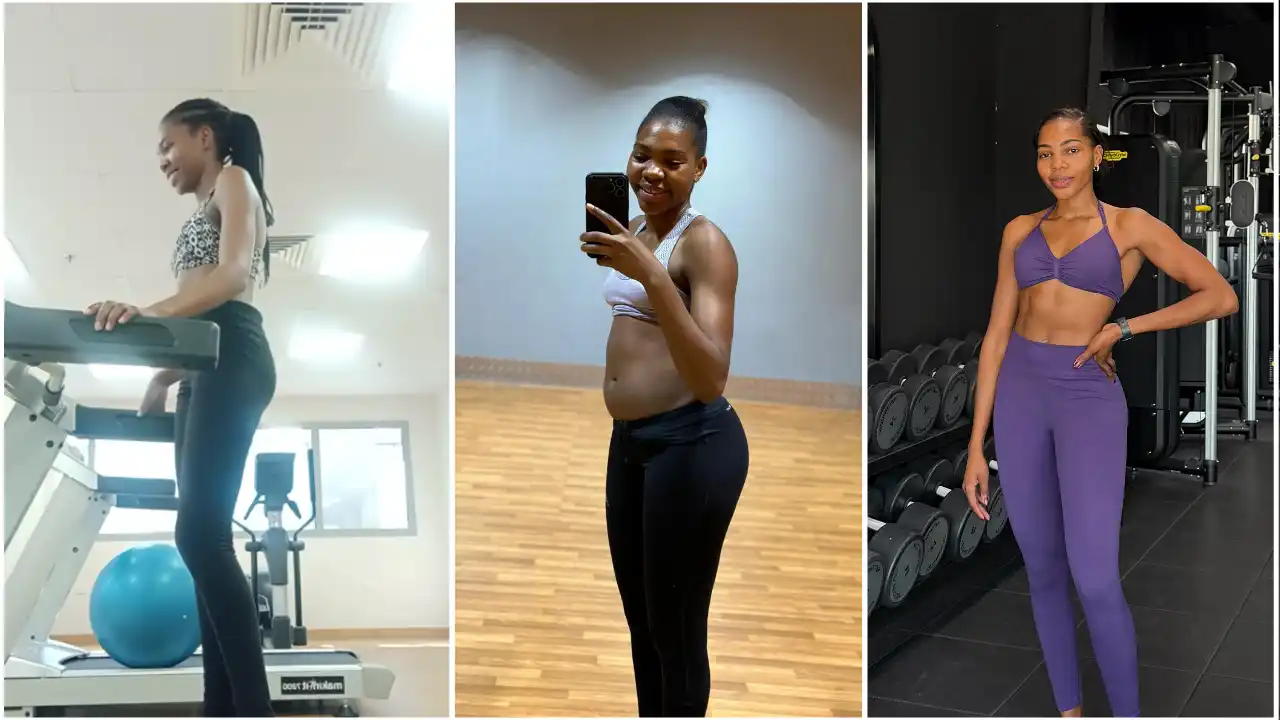
When I first started my fitness journey, I was extremely slim. At the beginning, all I wanted was abs. But the more I trained, the more my goals changed. I wanted curves. More muscle. Bigger glutes. A stronger body.
The problem was simple: I had no real strategy. I did not understand nutrition properly, nor recovery, hormones, digestion, sleep, stress, or body composition. I just knew I wanted results.
So I did what many girls do when they want to gain weight. I started eating everything.
Burgers. Loaded nachos. Sugary coffees. Pizza after late shifts. Random snacks between work. I told myself it was fine because I was in a “gaining phase.”
At the same time, I was working brutal waitress shifts, training at 4:00 AM after work, and sleeping around 7:00 AM. Looking back now, my body was under constant stress. And honestly? My body showed it.
Yes, I gained 10kg. But not in the way I wanted. I was constantly bloated, my digestion felt terrible, and my skin broke out badly. I felt inflamed and uncomfortable in my own body. I remember standing in front of the mirror feeling confused because technically I had “gained weight,” but I did not feel stronger, healthier, or more confident.
That was my wake-up call. Because for the first time, I understood something important: more calories do not automatically mean more muscle. And eating less does not automatically mean healthy fat loss.
That experience is what pushed me to properly study fitness, nutrition, metabolism, training science, hormones, and body composition. And if I could restart my journey today, I would do almost everything differently.
Quick Answer: Weight Loss vs. Clean Weight Gain
If your goal is clean muscle gain, focus on a controlled calorie surplus, high protein intake, progressive strength training, proper sleep, and nutrient-dense foods instead of using junk food as your main calorie source. If your goal is sustainable fat loss, focus on high-volume meals, enough protein to protect muscle, daily movement, strength training, better sleep, and a moderate calorie deficit instead of extreme restriction. In both cases, the answer is not punishment. It is structure.
The Biggest Fitness Lie People Still Believe
“Eat everything to gain weight.”
“Eat as little as possible to lose fat.”
Both approaches can ruin your progress. Dirty bulking often leads to unnecessary fat gain, poor digestion, low energy, bloating, inflammation, and feeling uncomfortable in your own body. Extreme dieting often leads to muscle loss, cravings, binge eating, poor recovery, low training performance, and rebound weight gain later.
And I see this constantly with clients. Women who barely eat all day, survive on coffee, do endless cardio, and then wonder why their body looks soft instead of strong. Or the opposite: people trying to “bulk” by eating fast food every day and calling it a fitness plan. Your body is not confused. It is responding to the environment you keep creating.
Weight Loss vs. Clean Muscle Gain: The Simple Difference
| Goal | Main Strategy | Food Focus | Training Focus | Biggest Mistake |
| Fat Loss | Moderate calorie deficit | High-volume meals, lean protein, vegetables | Strength training, steps, steady cardio | Eating too little and losing muscle |
| Clean Weight Gain | Controlled calorie surplus | Protein, carbs, healthy fats, nutrient-dense foods | Progressive overload, compound lifts | Eating anything and gaining mostly fat |
| Body Recomposition | Small deficit or maintenance | High protein, balanced meals, consistency | Resistance training with progression | Changing the plan too soon |
This is why your strategy must match your goal. Trying to lose fat and trying to gain muscle are not the same process. But both require the same foundation: protein, training, recovery, consistency, and patience.
What I Would Do Differently for Clean Weight Gain
If my goal today was to build lean muscle without gaining unnecessary body fat, I would stop treating weight gain like a free-for-all. Healthy weight gain is structured. It is not just about eating more; it is about eating enough of the right foods, training hard enough to give your body a reason to grow, and recovering well enough to actually build muscle.
1. I Would Prioritize Protein First
This is where most people massively underestimate their needs. My protein staples would be whole eggs, chicken thighs, salmon, Greek yogurt, lean steak, tuna, cottage cheese, and protein powder when needed.
Protein matters because muscle growth depends on muscle protein synthesis, which is the process of repairing and building muscle tissue after training. A strong evidence base supports higher protein intake when combined with resistance training. A major meta-analysis, published in the British Journal of Sports Medicine, found that protein supplementation improves gains in muscle strength and size during resistance training, with benefits leveling off around 1.6g/kg/day for many people.
A practical target for most active clients is 1.6-2.2g of protein per kg of body weight per day. And no, eating “healthy-ish” is usually not enough. A lot of women think they are eating high protein because they had a smoothie, a salad, and maybe some chicken at dinner. But when we actually calculate it, they are often far below what their body needs to build or maintain muscle.
2. I Would Use Calories Strategically – Not Emotionally
Your body needs energy to build new tissue. But there is a huge difference between fueling your body and constantly overeating processed food. The foods I would prioritize now include rice, oats, potatoes, avocado, nut butters, fruit, bagels, beans, lentils, and full-fat Greek yogurt.
Not because they are magic, but because they support training performance, recovery, hormones, digestion, energy, and consistency. One thing I learned the hard way: when your digestion feels terrible, everything feels harder. Your workouts suffer, your recovery suffers, your confidence suffers, and your body stops feeling like a place you are proud to live in.
3. I Would Train With Progressive Overload
For clean muscle gain, random workouts are not enough. I would train 3-5 times per week and focus on compound movements like squats, hip thrusts, deadlifts, rows, presses, lunges, and pull variations.
The goal is not to destroy yourself every session. The goal is to gradually give your muscles a stronger reason to adapt. That means tracking weights, reps, sets, form, recovery, and progression over time. This is exactly why structured coaching can be so powerful. If you live in Dubai and want a plan built around your body, your schedule, and your goal, getting professional Personal Training is the most direct place to start.
4. I Would Treat Recovery as Part of the Program
This is the biggest thing I misunderstood years ago. I thought more exhaustion meant more discipline. Now I know that is completely false. Muscle grows during recovery, hormones regulate during recovery, and your nervous system resets during recovery.
Constantly running on stress, caffeine, poor sleep, and late-night training changes everything. Sleep loss affects hormonal function and glucose metabolism, and clinical research available through the PubMed Central links restricted sleep with changes in cortisol, leptin, ghrelin, appetite, and metabolic regulation. Looking back now, my 4:00 AM workout schedule probably hurt my progress more than I realized. Not because late workouts are “bad,” but because my whole lifestyle was built around stress, poor sleep, and survival mode. That is not a strong foundation for muscle growth.
What I Would Do Differently for Fat Loss
Most people approach fat loss like punishment. That is usually why they cannot sustain it. Real fat loss is not about surviving tiny meals and craving everything around you. It is about making hunger easier to manage while giving your body enough structure to preserve muscle, energy, and sanity.
1. I Would Make Food Volume Your Best Friend
This changed everything for me. I now make roughly half my plate vegetables whenever fat loss is the goal. Why? Because vegetables improve fullness, support digestion, reduce calorie density, add fiber, and make fat loss psychologically easier.
One of my favorite tricks is mixing cauliflower rice with normal rice at a 50:50 ratio. You still get a full plate, a satisfying meal, and the feeling that you are eating enough. But with fewer calories overall. Small strategies like this make consistency so much easier. And consistency is what changes your body.
2. I Would Keep Protein High During Fat Loss
Protein becomes even more important in a calorie deficit. My go-to options are egg whites with one whole egg, chicken breast, shrimp, tuna, lean beef, cottage cheese, fat-free Greek yogurt, and protein isolate.
Protein helps preserve muscle during fat loss, improves fullness, and has the highest thermic effect of food. Protein typically requires more energy to digest and process than carbs or fats, with data published in Food & Nutrition Research estimating that your body actively expends around 20-30% for protein, 5-10% for carbohydrates, and 0-3% for fat. That is one reason high-protein meals are so useful during fat loss. It helps you stay full, protect muscle, and make the diet feel less miserable.
3. I Would Be Careful With Healthy Fats
Healthy fats are important, but they are still calorie-dense. Fat has 9 calories per gram, while protein and carbohydrates have 4 calories per gram. This is why oils, nut butters, dressings, sauces, nuts, seeds, and avocado can quietly turn a healthy meal into a very high-calorie meal. That does not mean avoid them; it simply means portion awareness matters. Especially if your goal is fat loss.
4. I Would Stop Drinking Calories Without Realizing It
Honestly, this alone changes results for so many people. I see this constantly in Dubai: iced coffees, juices, smoothies, mocktails, sweetened matcha, and “healthy” café drinks. People do not realize how quickly liquid calories add up because they barely affect fullness. You can easily drink 400-700 extra calories per day without ever feeling like you ate more. That is not a discipline problem; it is an awareness problem.
The Dubai Reality Most Fitness Advice Ignores
A lot of online fitness advice completely ignores real lifestyle context. But your environment matters, and Dubai has its own challenges.
AC Dehydration Is Real
If you spend your day moving between your apartment, your car, the office, malls, restaurants, and the gym, you are probably living in air conditioning most of the day. That can make it easy to underestimate hydration. Even mild dehydration can affect energy, training performance, concentration, cravings, recovery, and perceived hunger. This becomes even more important during summer. For more practical strategies, read my complete guide on How to Stay Fit in Dubai Summer.
Stress Changes the Way Your Body Responds
Many professionals in Dubai live with long working hours, irregular meals, constant meetings, business travel, late dinners, and poor sleep. That lifestyle directly affects appetite, recovery, cravings, and energy. You cannot constantly operate in survival mode and expect your body to perform optimally. This is why the best fitness plan is not the most extreme one – it is the one that fits your real life well enough that you can actually repeat it.
Restaurant Culture Makes Consistency Harder
Dubai has an amazing food scene, but eating out constantly can make body composition harder to manage because of hidden oils, large portions, high-calorie sauces, sugary drinks, desserts, and “small bites” that add up quickly. The goal is not to avoid restaurants forever; it is to navigate them intelligently: prioritize protein, add vegetables first, choose one main indulgence, drink water before the meal, and stop turning every social dinner into a cheat day. Fitness should fit your life, not remove you from it.
Busy Schedules Need Flexible Training Options
Some people genuinely do not have the time or energy for long gym sessions. That does not mean they cannot progress; it means the strategy needs to match the season of life they are in.
- For busy professionals and executives with demanding schedules, utilizing highly time-efficient EMS Training Dubai can be a powerful tool when paired with proper nutrition.
- For families trying to build healthier routines together, focusing on structured Kids & Family Fitness can make healthy living feel like part of your lifestyle rather than another obligation.
- For mothers rebuilding strength and confidence after pregnancy, a highly specialized path like Pre & Postnatal Training ensures you protect your body while progressing safely.
- For clients looking to stay strong, mobile, and independent through the years, investing in targeted Active Aging & Mobility Coaching is the smartest long-term strategy.
Different goals need different systems. That is the whole point. So let’s build the system that fits your body, your lifestyle, and your goals.
Not sure whether personal training, EMS, nutrition coaching or a more specialised coaching path fits your goal best? Read my guide to personal training options in Dubai before choosing your setup.
The 5 Biggest Mistakes I See Constantly
- Under-Eating Protein: Many people are “eating healthy,” but not eating enough protein to support muscle, recovery, and body recomposition. A smoothie bowl and a salad can be healthy, but they are not automatically high-protein.
- Doing Endless Cardio: Cardio burns temporary calories. Strength training changes your permanent body shape. If you only chase calorie burn, you may lose weight but still not get the toned, strong look you want.
- Ignoring Sleep: Sleep directly affects hunger, cravings, cortisol, recovery, mood, energy, and training performance. It is not optional.
- Treating Fitness Like Punishment: The more extreme and miserable the plan is, the faster most people abandon it. You need a plan you can repeat.
- Expecting Results Immediately: Real body recomposition takes time. Most people quit long before their body has had enough time to adapt. Social media has made people believe that dramatic transformation should happen in a few weeks – real life does not work like that.
My Simple 5-Step Starting Framework
- Step 1 – Choose the Right Goal: Do not say “I want to lose weight” if what you really mean is: “I want to look leaner, stronger, and more defined.” That is body recomposition – reducing fat while building or maintaining muscle.
- Step 2 – Set Your Calories Properly: A small calorie surplus for clean muscle gain, a small to moderate calorie deficit for fat loss, or maintenance calories for standard body recomposition. Extreme approaches always backfire. Use our free Calorie, BMR & TDEE Calculator to estimate a practical starting range for fat loss, maintenance, body recomposition or muscle gain.
- Step 3 – Hit Protein First: Aim for 1.6-2.2g of protein per kg of body weight per day. Start with protein first, then build the rest of the meal around it. Our Protein & Macro Calculator can turn your calorie target into a practical daily estimate for protein, carbohydrates and fat.
- Step 4 – Structure Your Plate: Stop guessing. Use this simple daily plate formula or read my in depth article How to Balance Your Plate: The Key to Sustainable Health
- Vegetables & Fruits (about 50%)
- Proteins (about 25%)
- Carbohydrates (about 25%)
- Step 5 – Train With Intention: 3-5 structured workouts per week are enough when effort is high, form is good, progression is tracked, and recovery is respected. Random workouts create random results; structured training creates measurable progress.0
You want to know more about Nutrition?
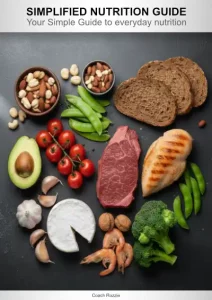
Get my Simplified Nutrition Guide
Frequently Asked Questions
Can I lose fat and build muscle at the same time?
Yes. This is called body recomposition. It works especially well for beginners, people returning to training after a break, and people with higher body fat. A comprehensive review featured in the Strength & Conditioning Journal highlights that it can also happen in trained individuals, but it usually requires more precision with protein, training, recovery, and calories.
How long does body recomposition realistically take?
Most people notice positive changes in energy, strength, and digestion within a few weeks. Visible fat loss often takes 4-8 weeks, while noticeable muscle gain usually takes several months. A real transformation takes longer than social media makes it look.
Should I use fitness supplements?
Supplements can help, but they do not replace the foundations. Before worrying about supplements, fix your protein, calories, training, sleep, hydration, and consistency. Protein powder can be useful if you struggle to hit your target through whole food, but it is not magic.
Is EMS training effective for body recomposition?
EMS training can be can be a useful time-efficient tool, especially for busy people who struggle to fit longer gym sessions into their schedule. But EMS works best when it is part of a complete system: proper nutrition, enough protein, progressive training, and recovery.
Do I need a personal trainer for this?
Not always. But a good coach can help you avoid months of guessing. The right coach can adjust your plan based on your real body, schedule, preferences, stress levels, and results – that is where transformation becomes sustainable.
Final Thoughts
If I could restart my journey today, I would stop trying to force results through extremes. I would stop glorifying exhaustion. I would stop dirty bulking. I would stop underestimating recovery. I would stop chasing shortcuts. And I would stop thinking that suffering automatically means discipline.
Because the biggest transformation happened when I finally understood this: your body responds best to consistency, recovery, structure, and intelligent strategy. Not punishment.
That is exactly what I now try to teach every client I work with. Because fitness should improve your life; it should not take it over.
Ready to Stop Guessing and Build a Plan That Fits Your Real Life?
If you live in Dubai and want a strategy built around your real body,
your real schedule, and your real goals, I would love to help you.
Connect with me directly on WhatsApp and let’s build your customized plan
Scientific Sources & Clinical References
- Morton RW, Murphy KT, McKellar SR, et al. A systematic review, meta-analysis and meta-regression of the effect of protein supplementation on resistance training-induced gains in muscle mass and strength in healthy adults. Br J Sports Med. 2018;52(6):376-384. doi:10.1136/bjsports-2017-097608
- Leproult R, Van Cauter E. Role of sleep and sleep loss in hormonal release and metabolism. Endocr Dev. 2010;17:11-21. doi:10.1159/000262524
- Ravn AM, Gregersen NT, Christensen R, et al. Thermic effect of a meal and appetite in adults: an individual participant data meta-analysis of meal-test trials. Food Nutr Res. 2013;57:10.3402/fnr.v57i0.19676. Published 2013 Dec 23. doi:10.3402/fnr.v57i0.19676
- Barakat, Christopher MS, ATC, CISSN1; Pearson, Jeremy MS1; Escalante, Guillermo DSc, MBA, ATC, CSCS, CISSN2; Campbell, Bill PhD, CSCS, FISSN3; De Souza, Eduardo O. PhD1. Body Recomposition: Can Trained Individuals Build Muscle and Lose Fat at the Same Time?. Strength and Conditioning Journal 42(5):p 7-21, October 2020. | DOI: 10.1519/SSC.0000000000000584